

Contact Tracing • Mobile App
Leveraging blockchain technology to mitigate workforce disruptions and maintain workplace safety standards for employees
Project Objective
Build a proof-of-concept mobile app solution using blockchain systems to create an anonymous and HIPAA-compliant way for an employer to do COVID-19 contract tracing for their employees.
role
Interaction Designer
timeline
3 months
core team
4 Engineers
2 Interaction Designers
1 Design Researcher
Key Skills
UX/UI design
Storyboarding
Prototyping
tools & methods
Sketch
User interviews
Central Question
How might we enable workplace COVID-19 contact tracing without compromising personal health data?
the challenge
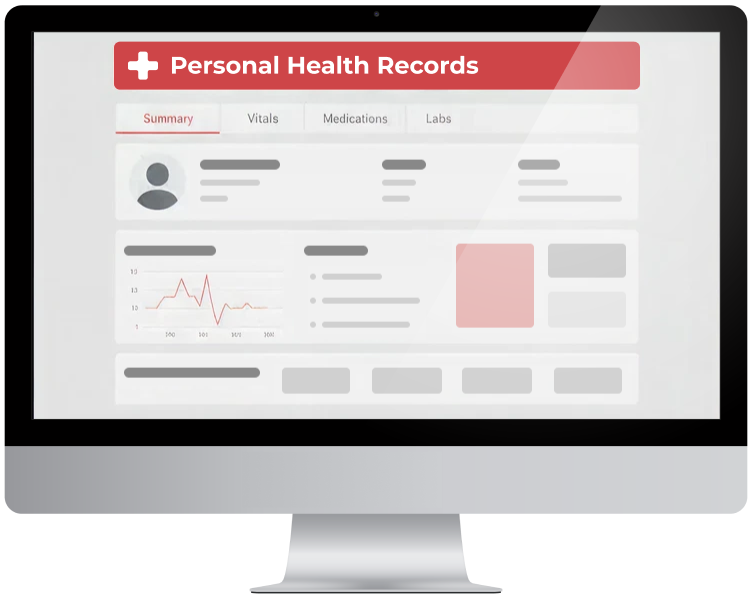
Contact tracing systems rely on people disclosing their personal health information, but due to HIPAA privacy laws, companies are prohibited from having medical information about their own employees.
design solution
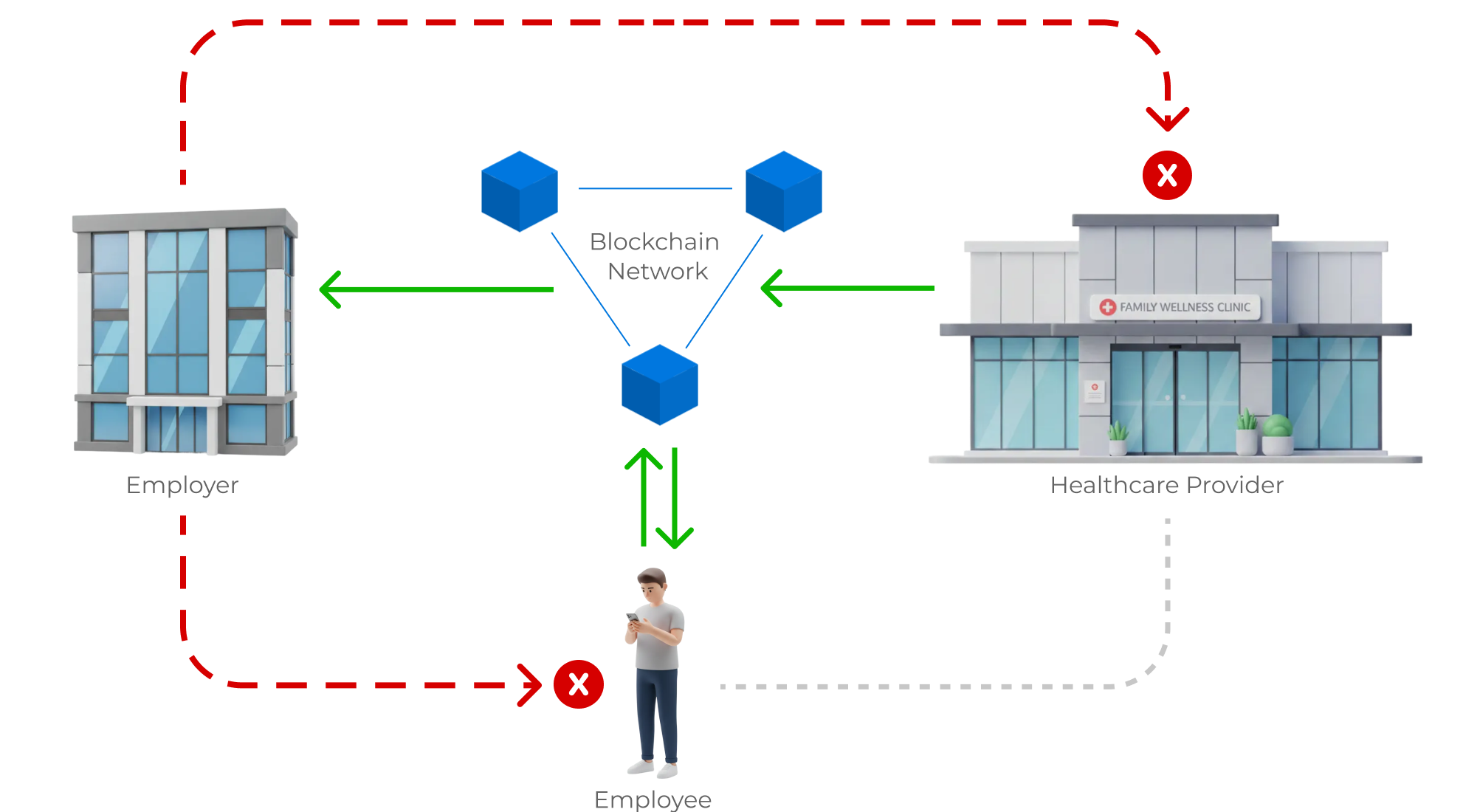
Using a blockchain network we were able to create unique but anonymized identities for employees, and securely share relevant information between an employer, their employees, and an integrated healthcare provider.
Health Passport mobile app
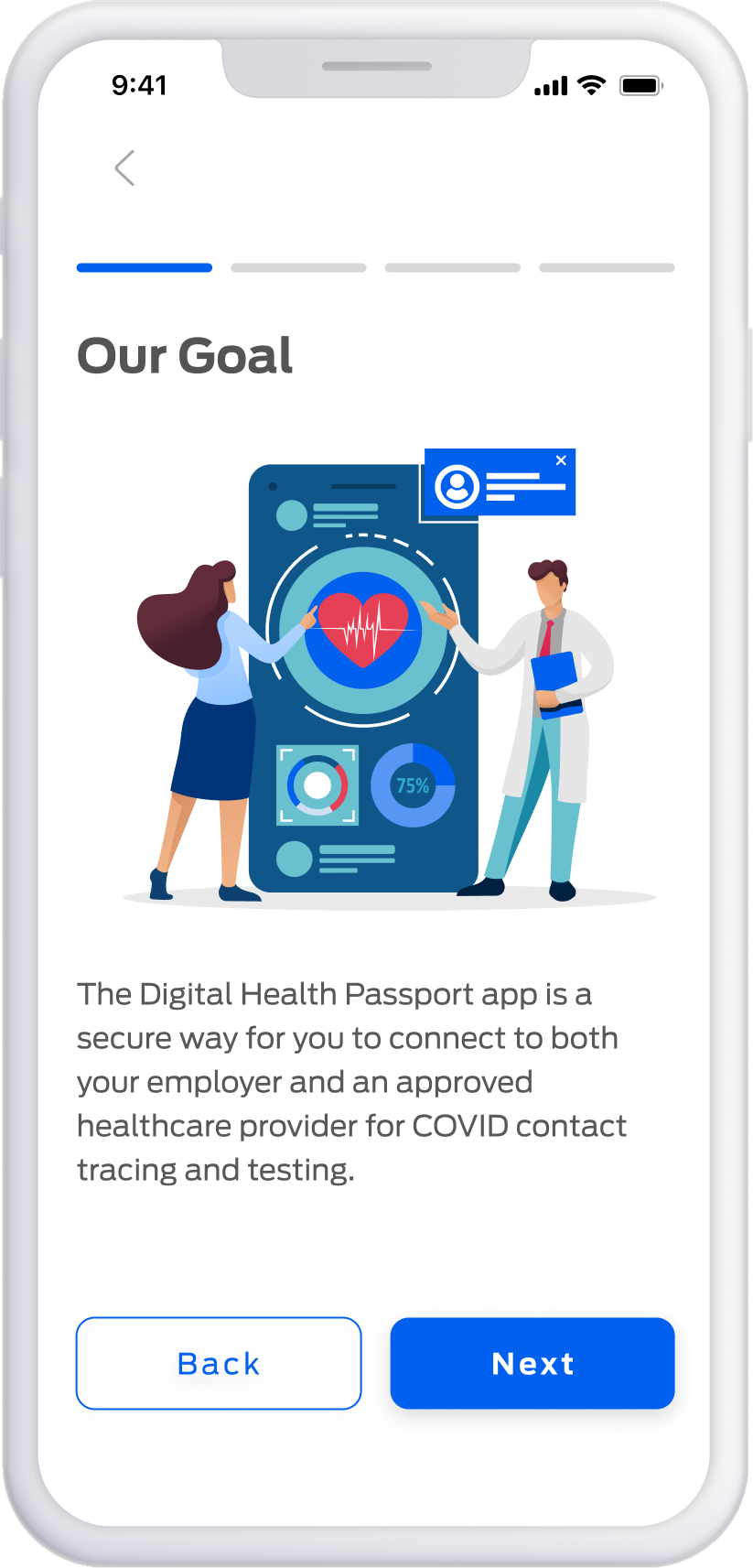
Onboarding
Introduces the concept of the Health Passport, what it’s for, and how to set it up.
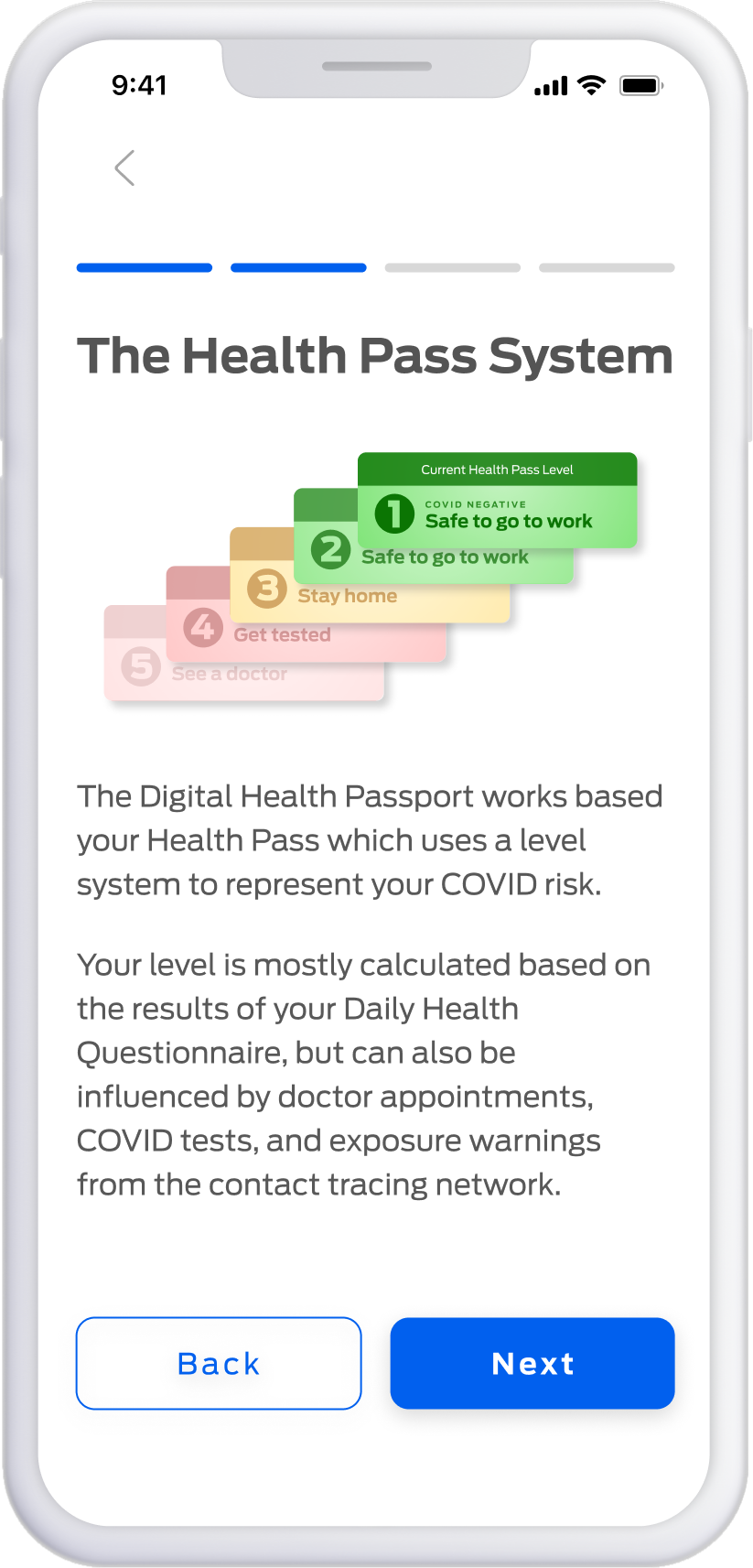
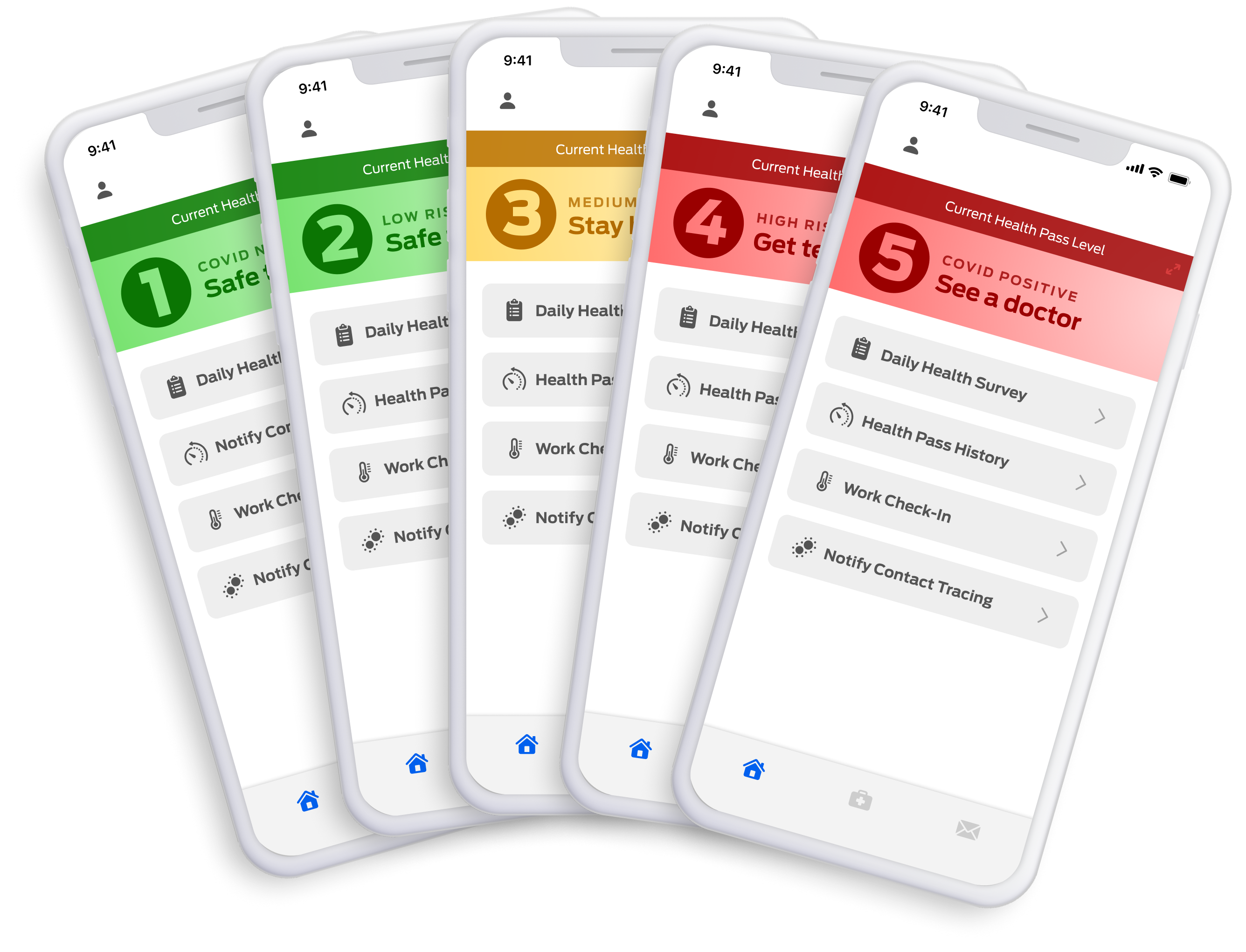
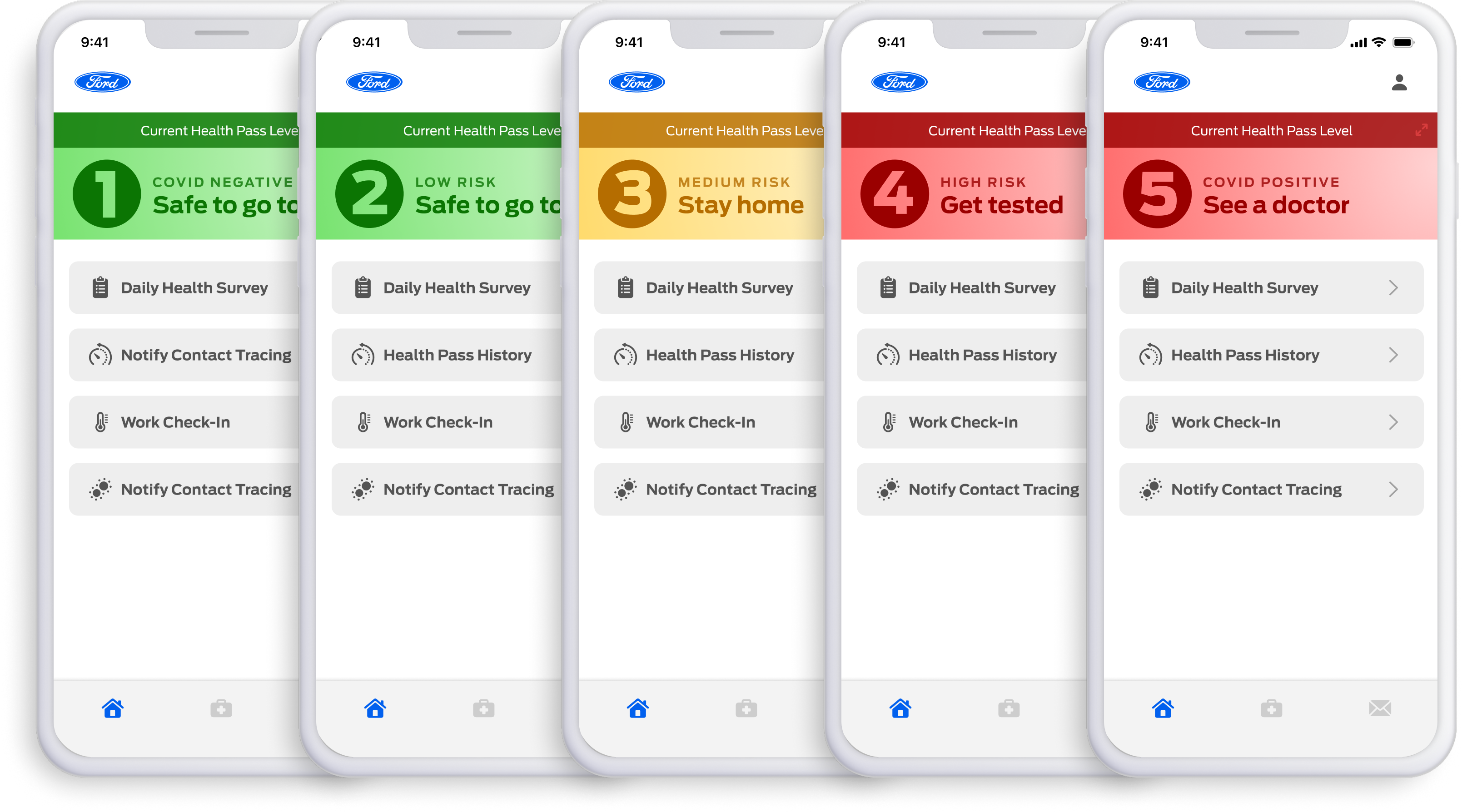
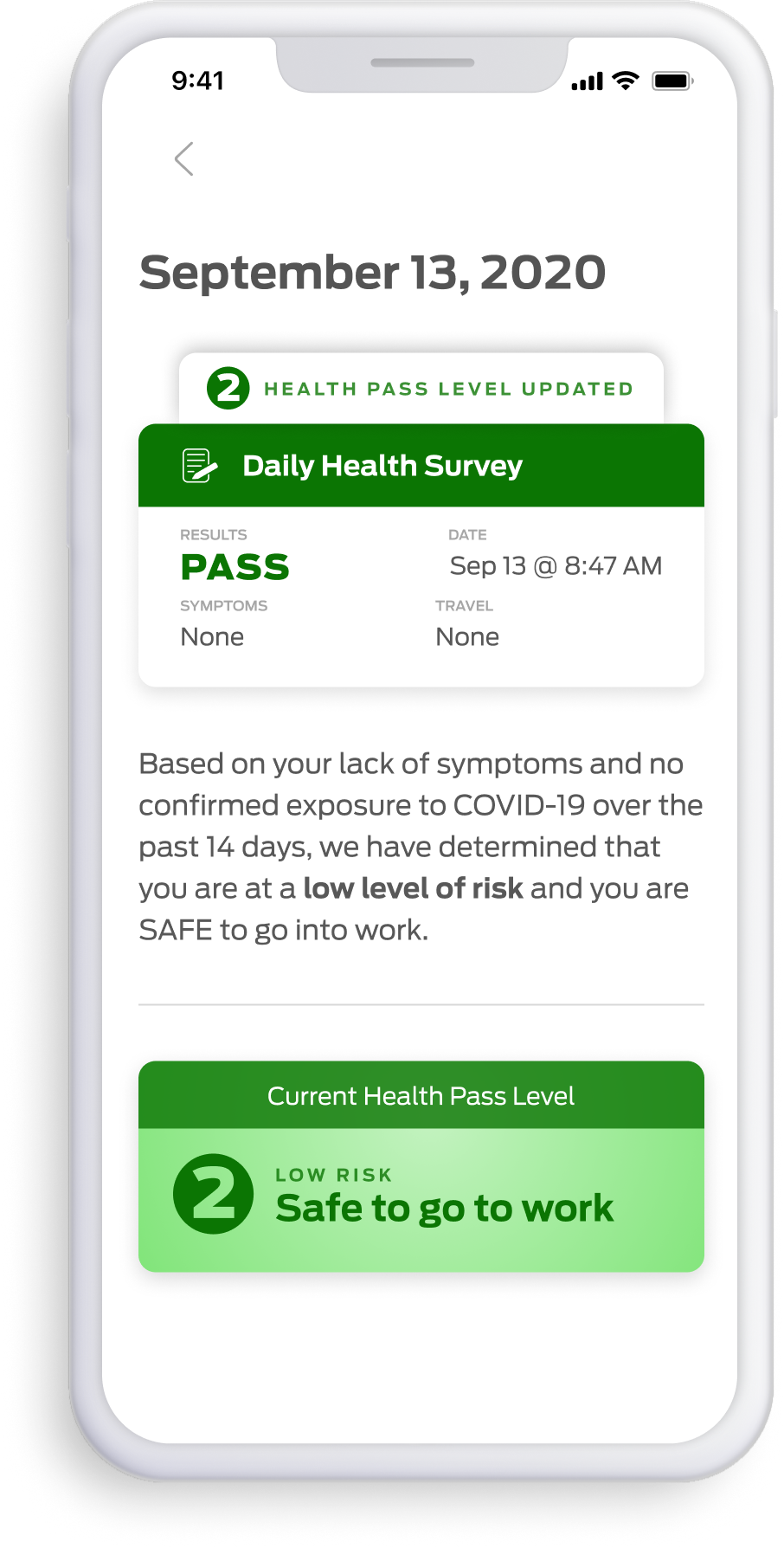
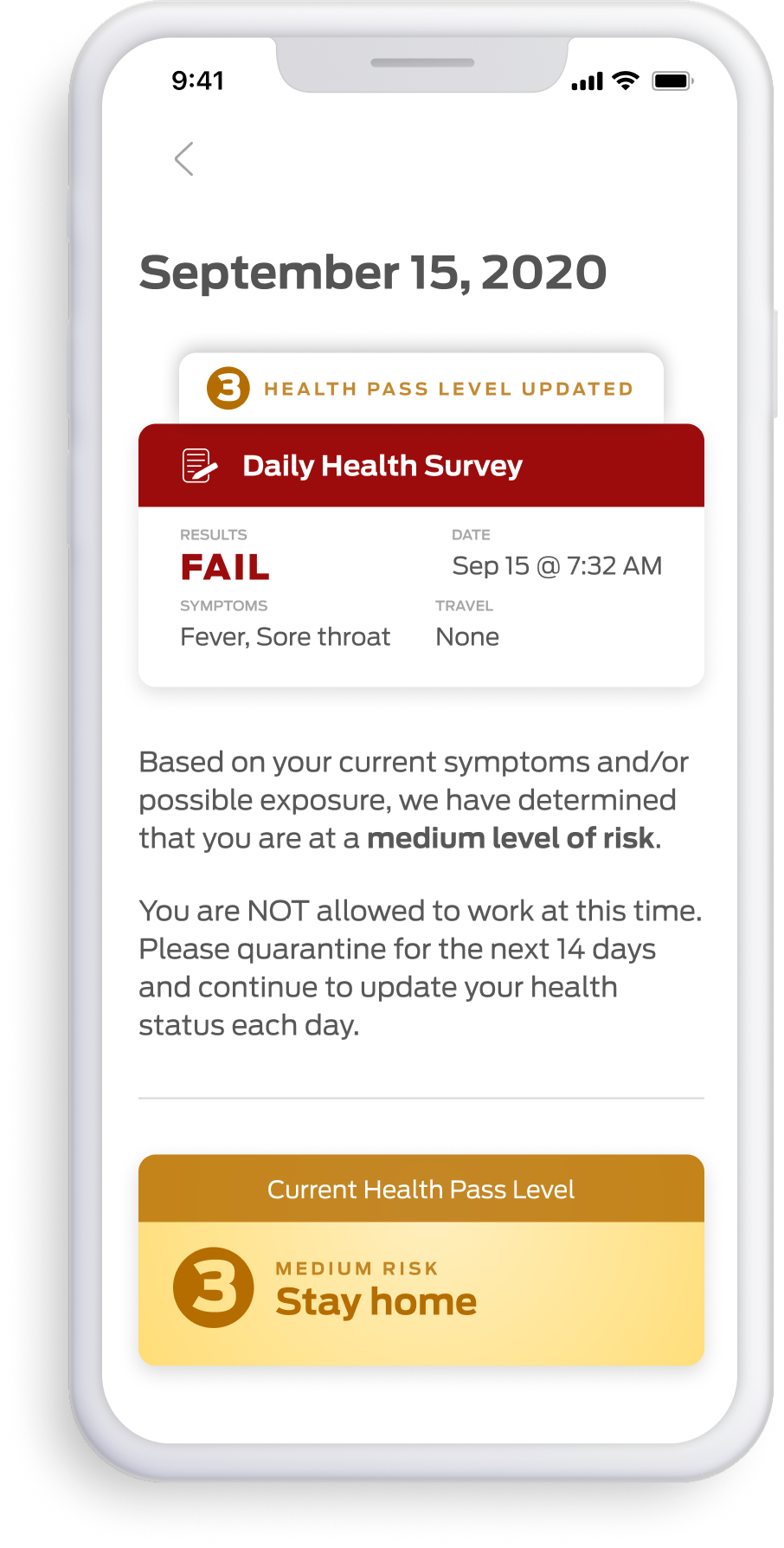
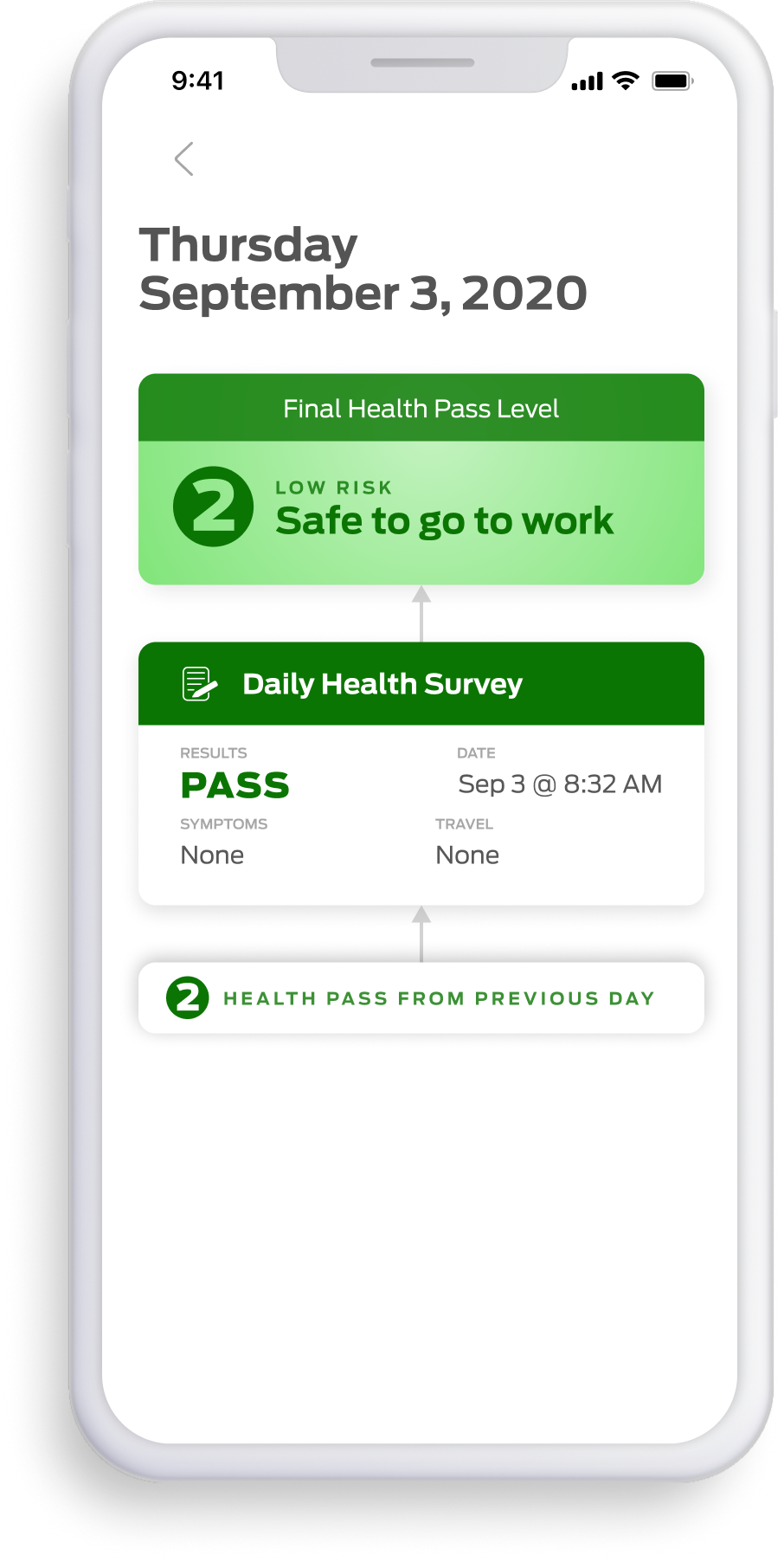
Health Pass Level System
Each level represents the user’s current risk of having or spreading COVID, and dictates their ability to go into work.
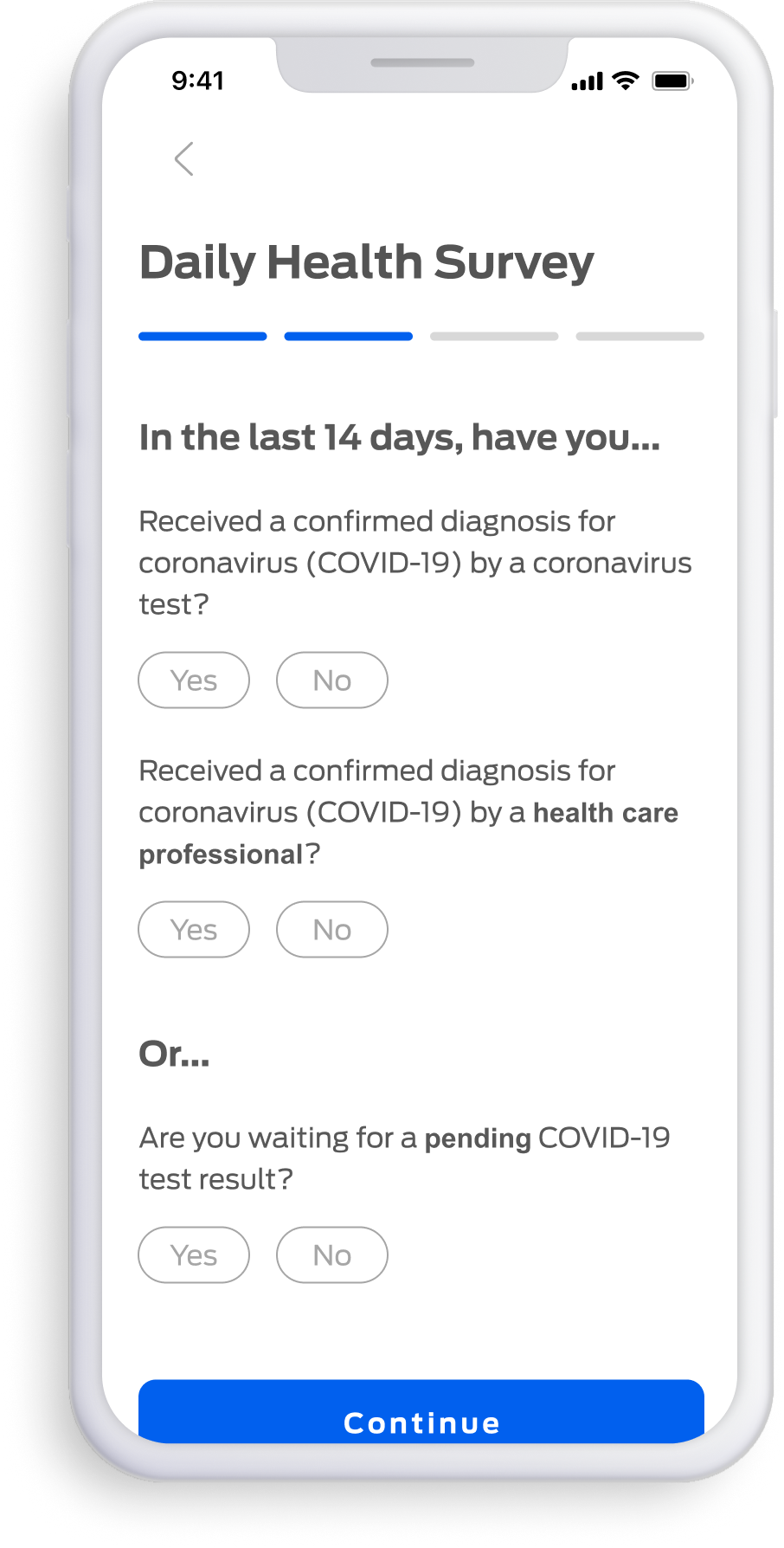
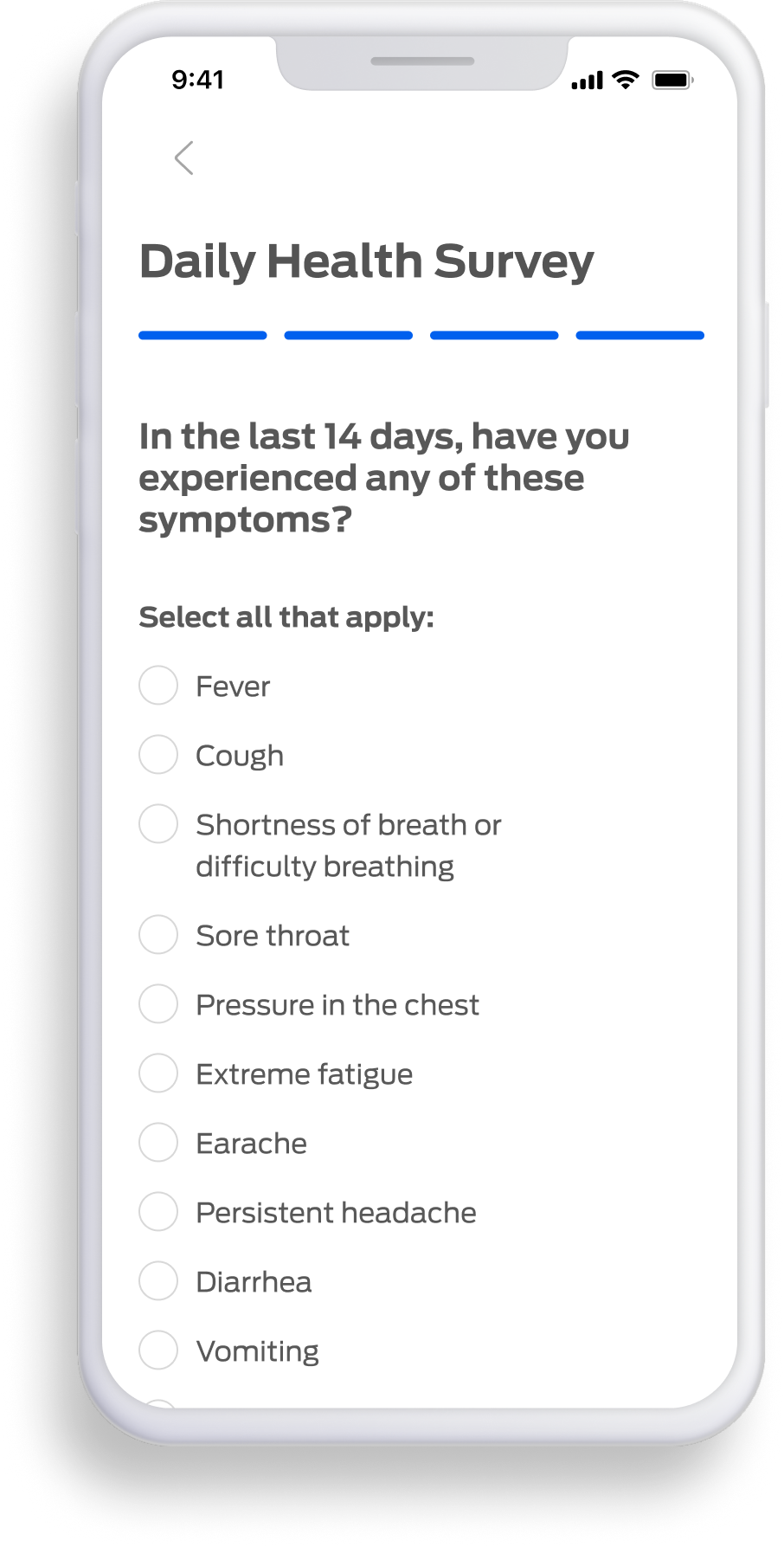
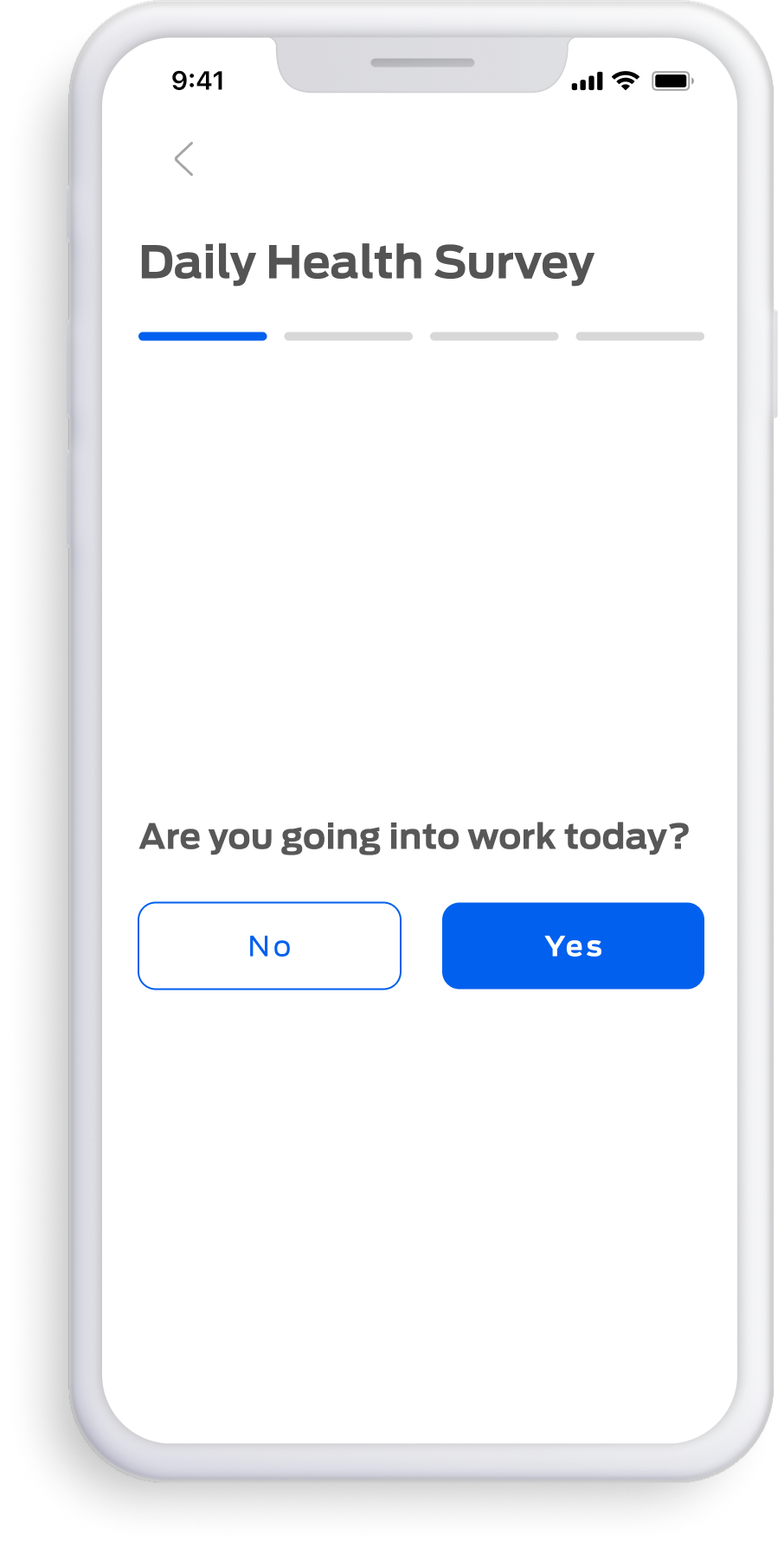
Daily Health Evaluations
User’s daily Health Pass level is calculated based on presence/absence of symptoms and possible exposure to other people.

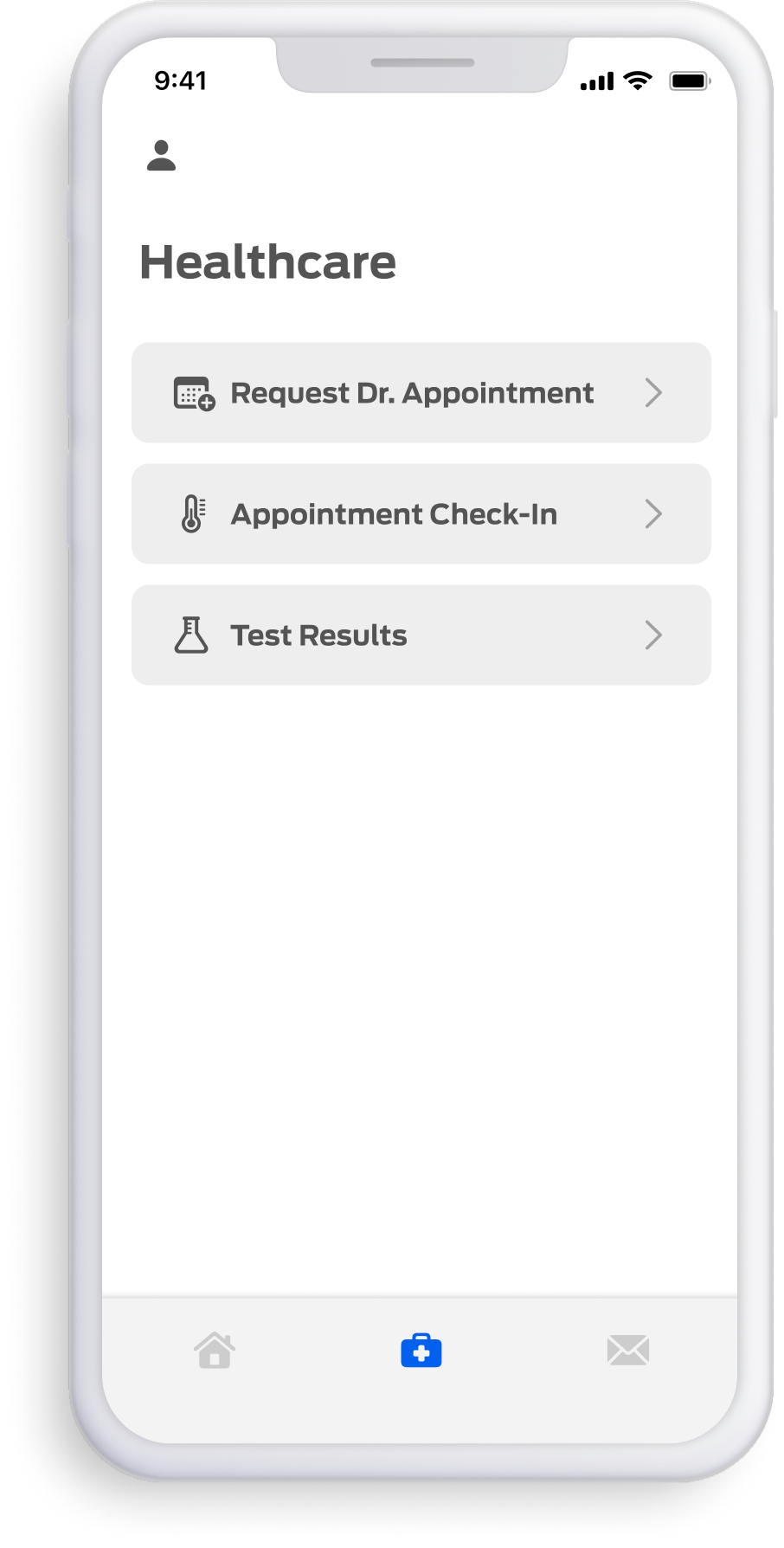
Integrated Healthcare
Seamless incorporation for connected doctor’s office to schedule appointments, request tests, and get results.
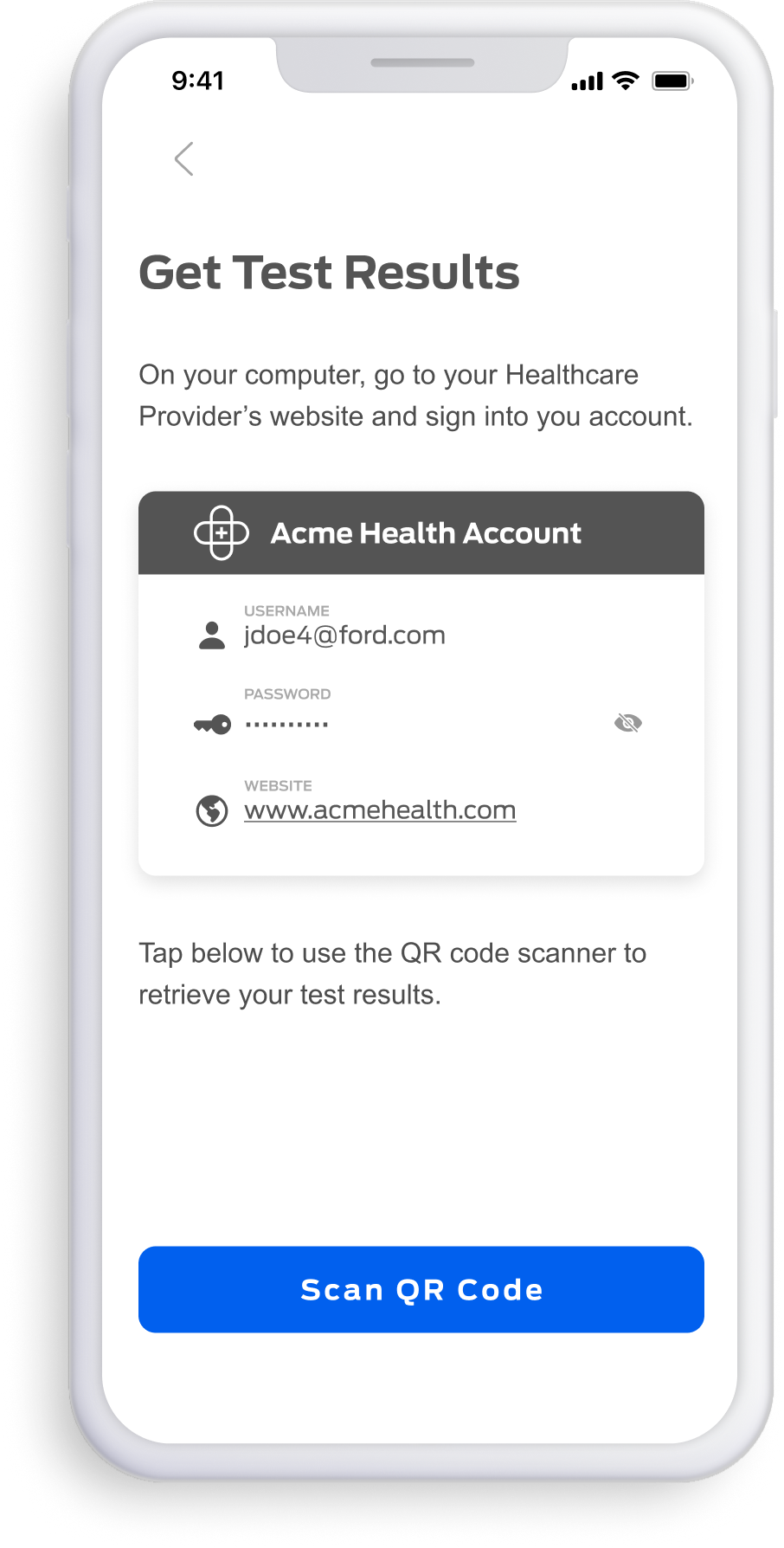
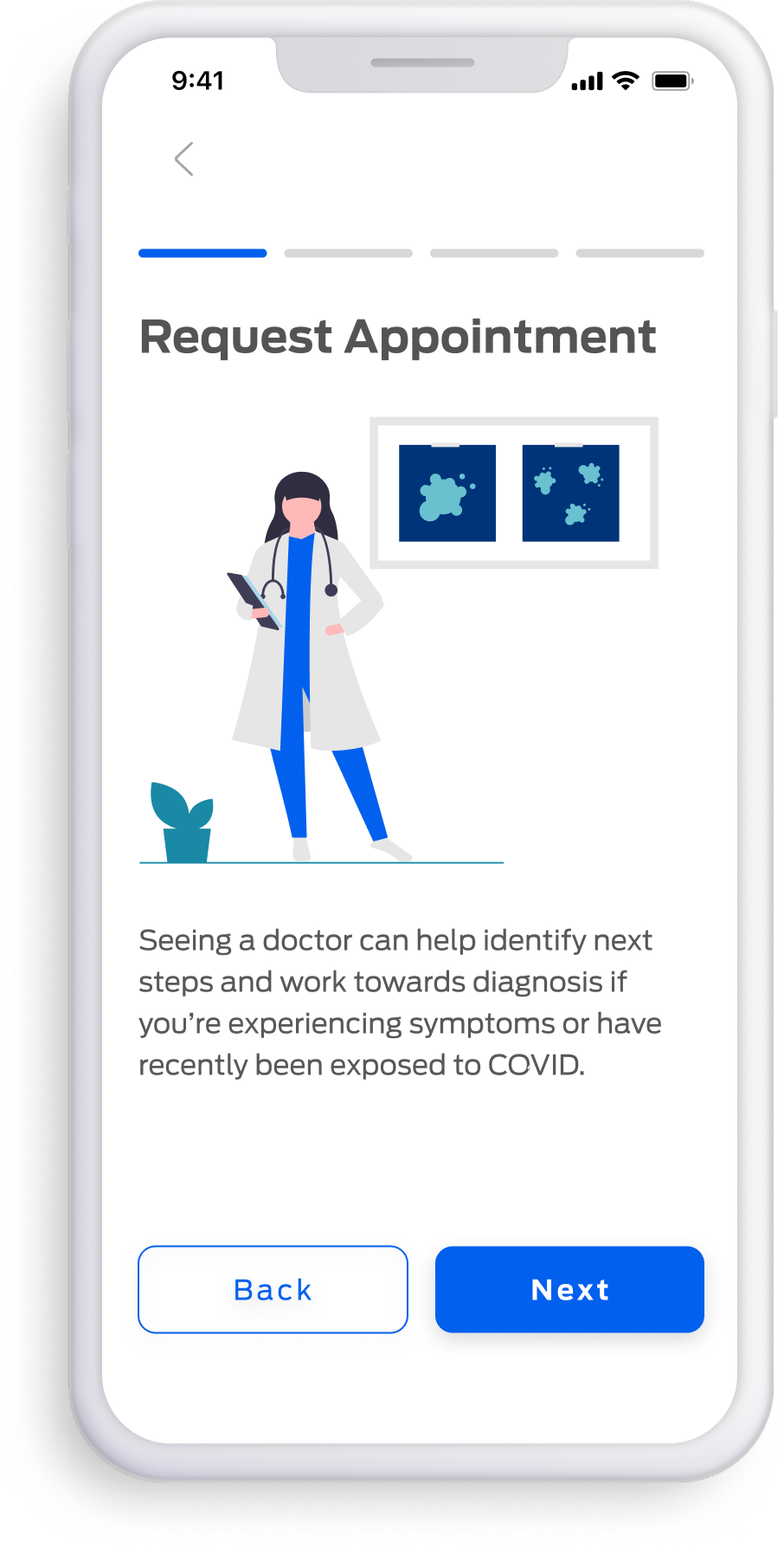

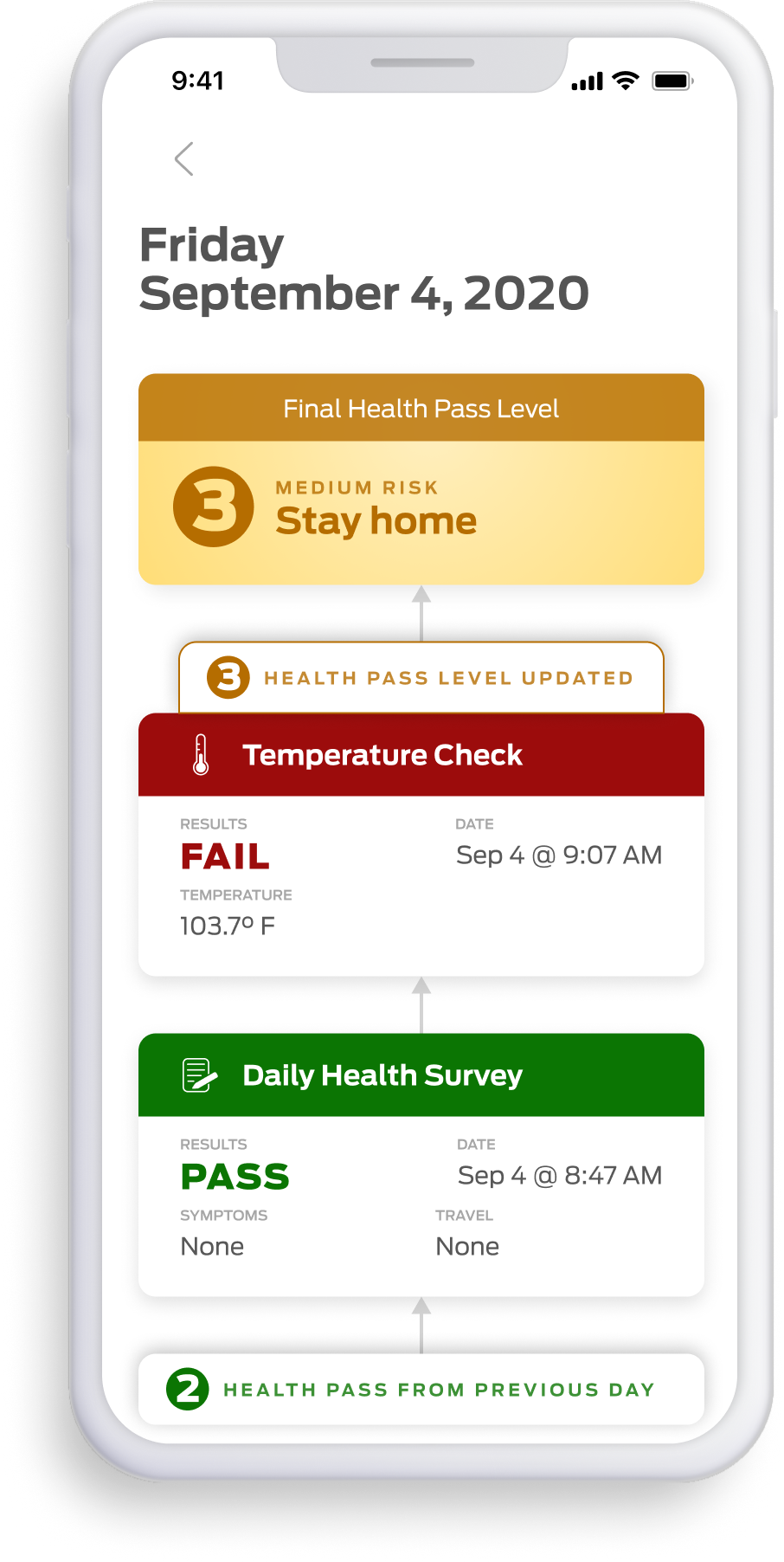
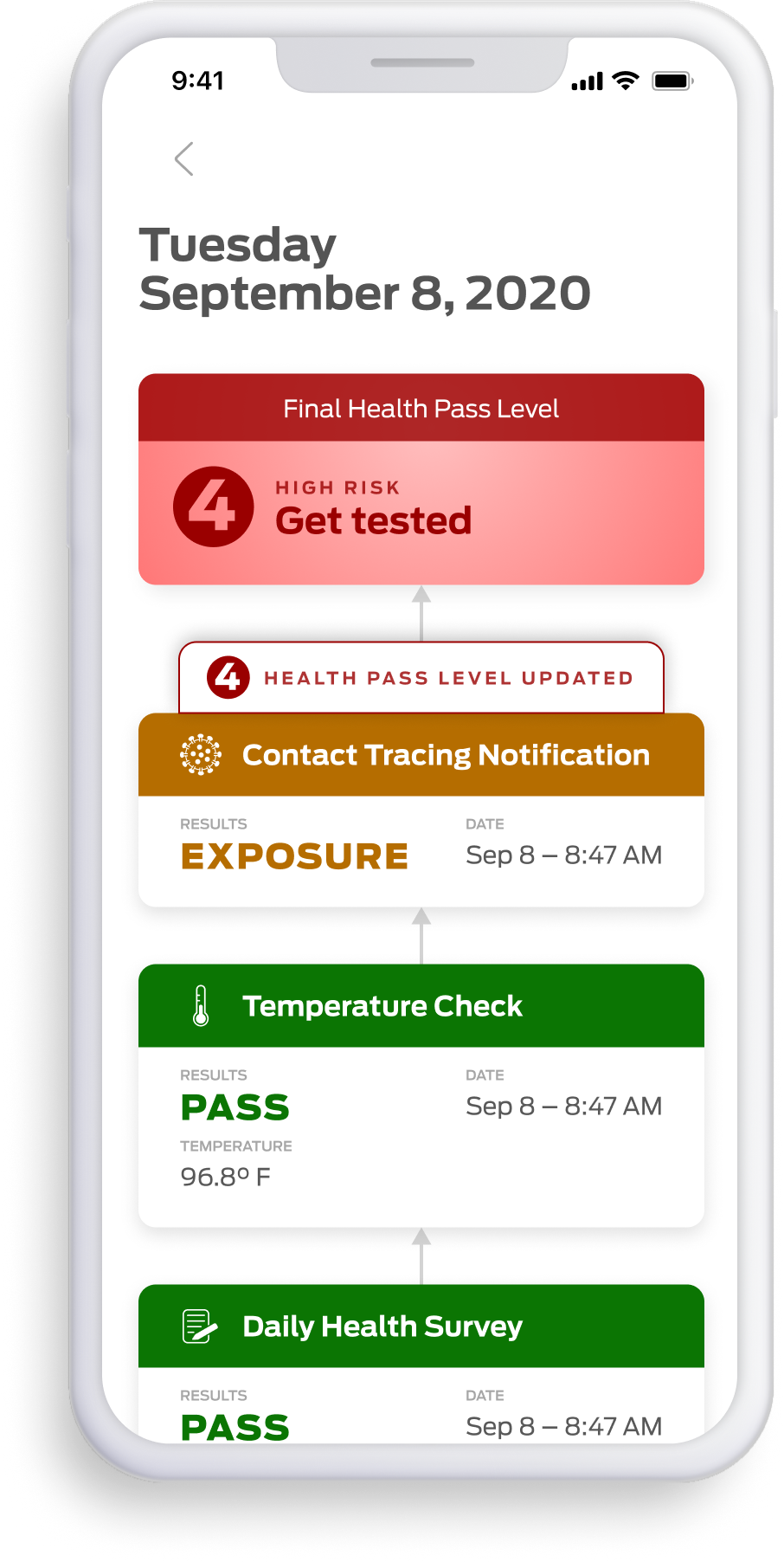
Dynamic Status Updates
Health Pass level gets changed by certain day-to-day events.
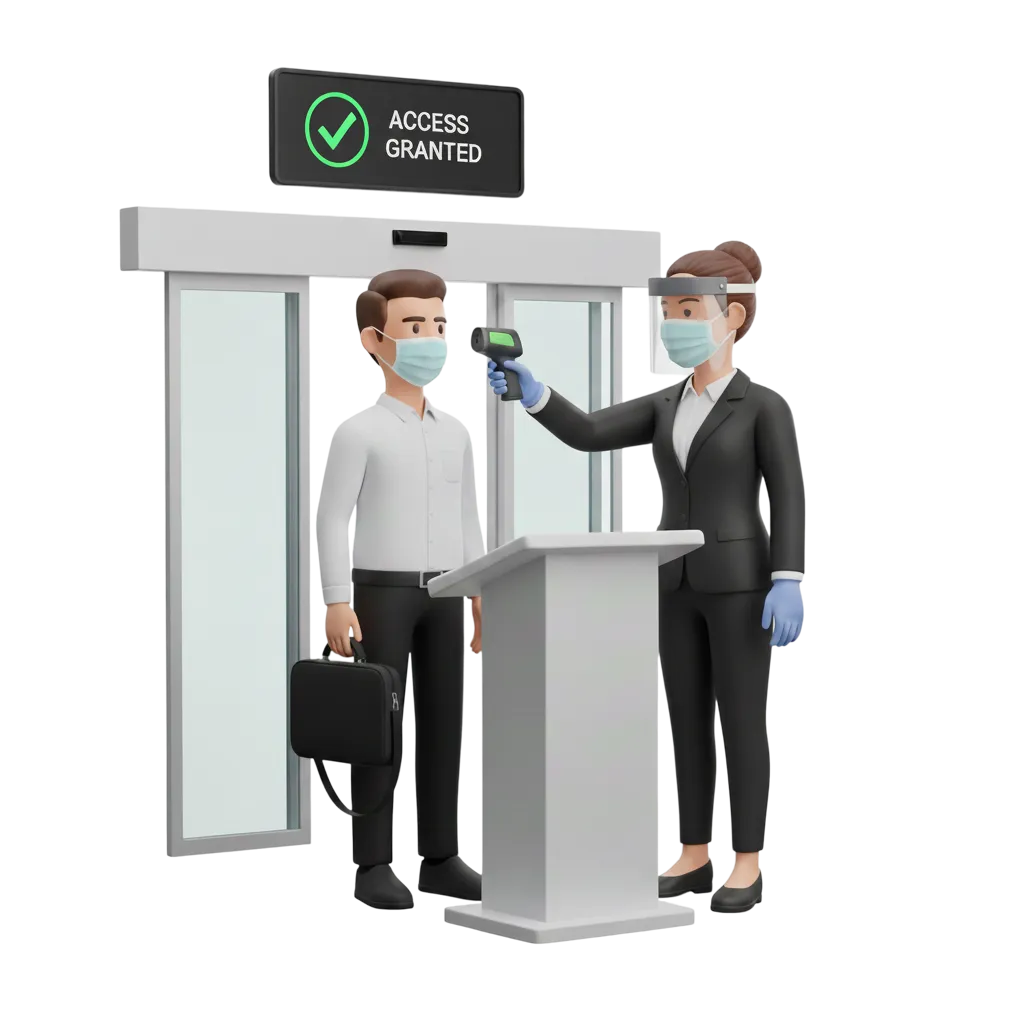
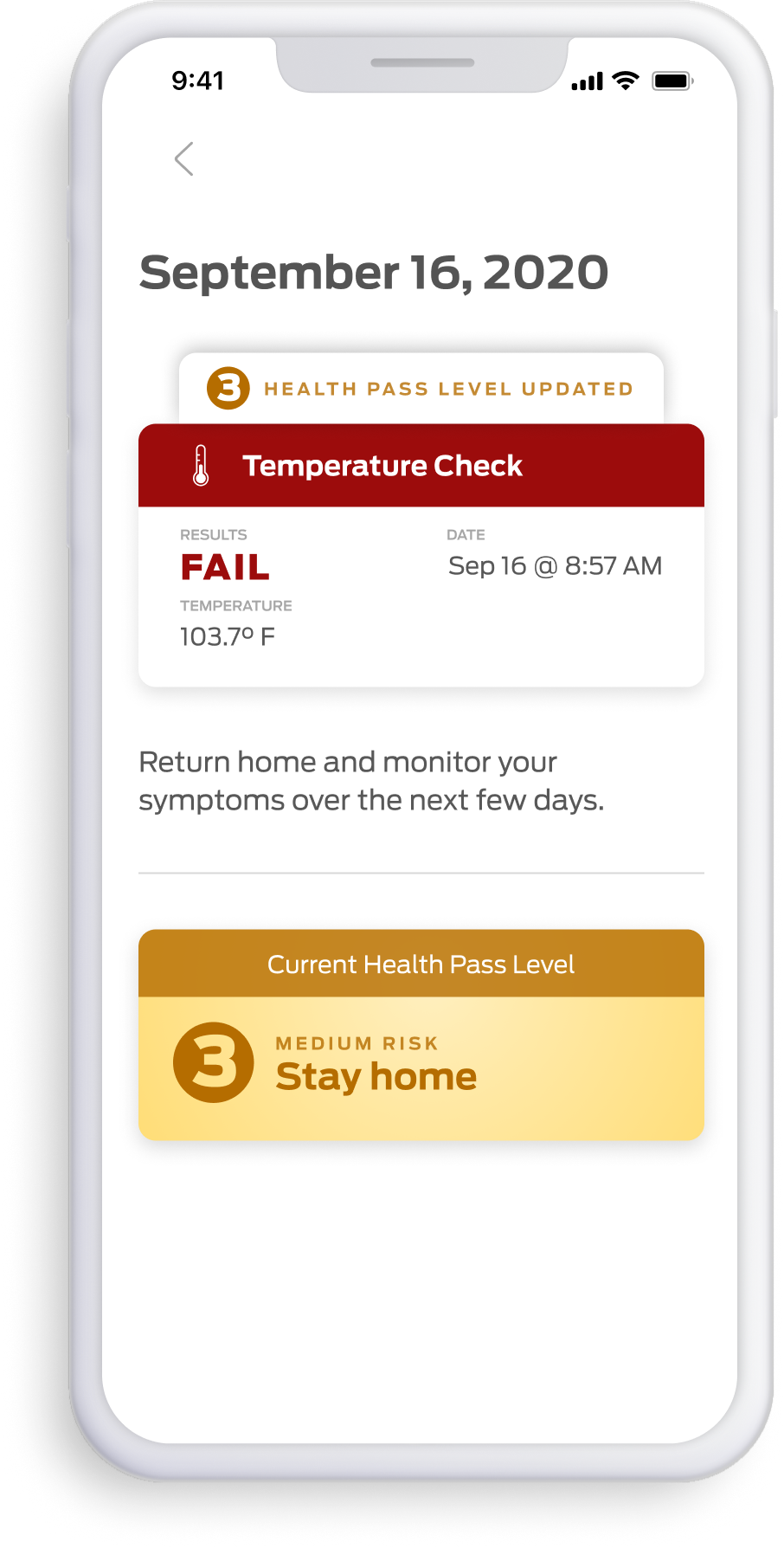
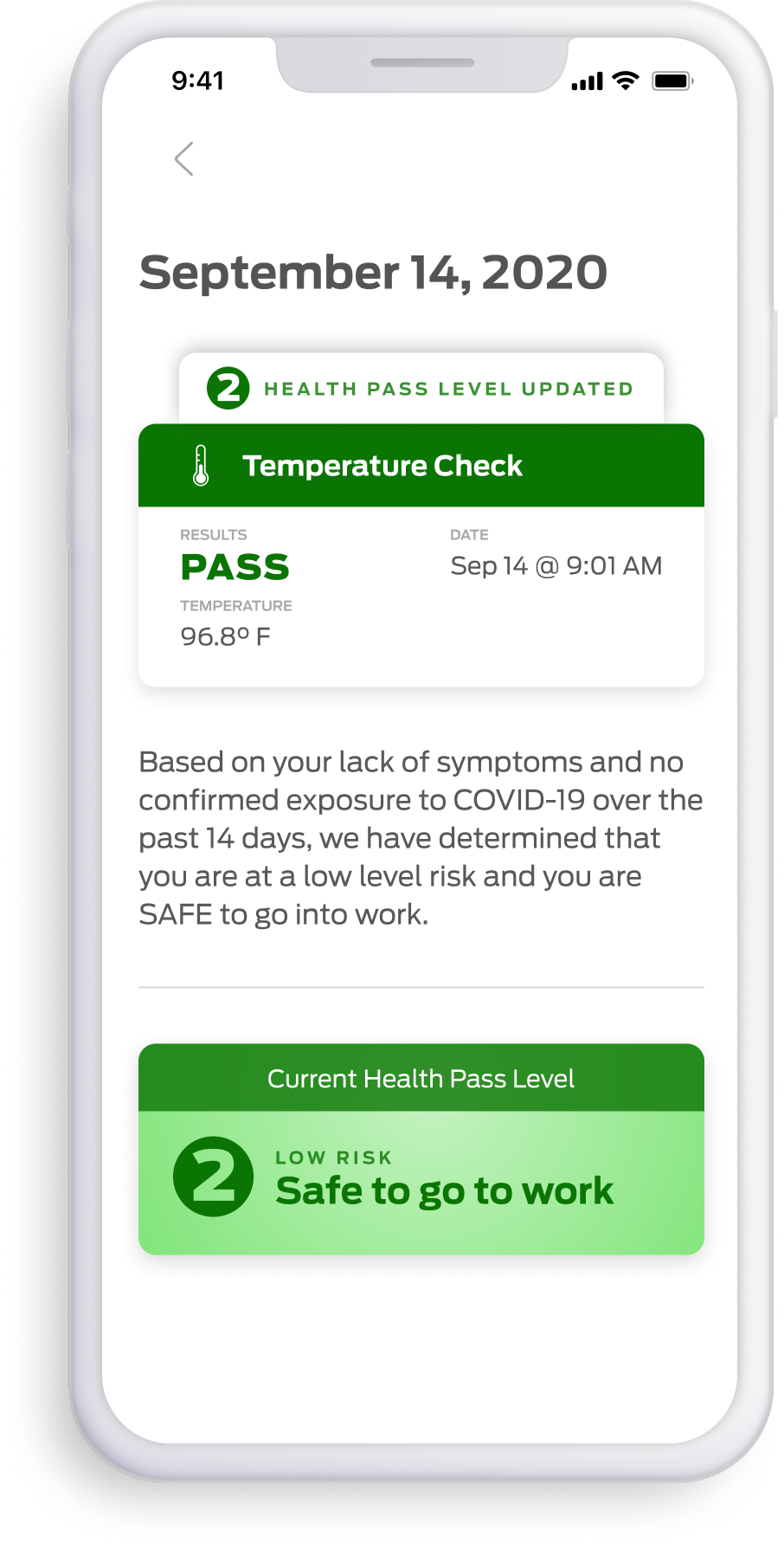
Temperature checks at work
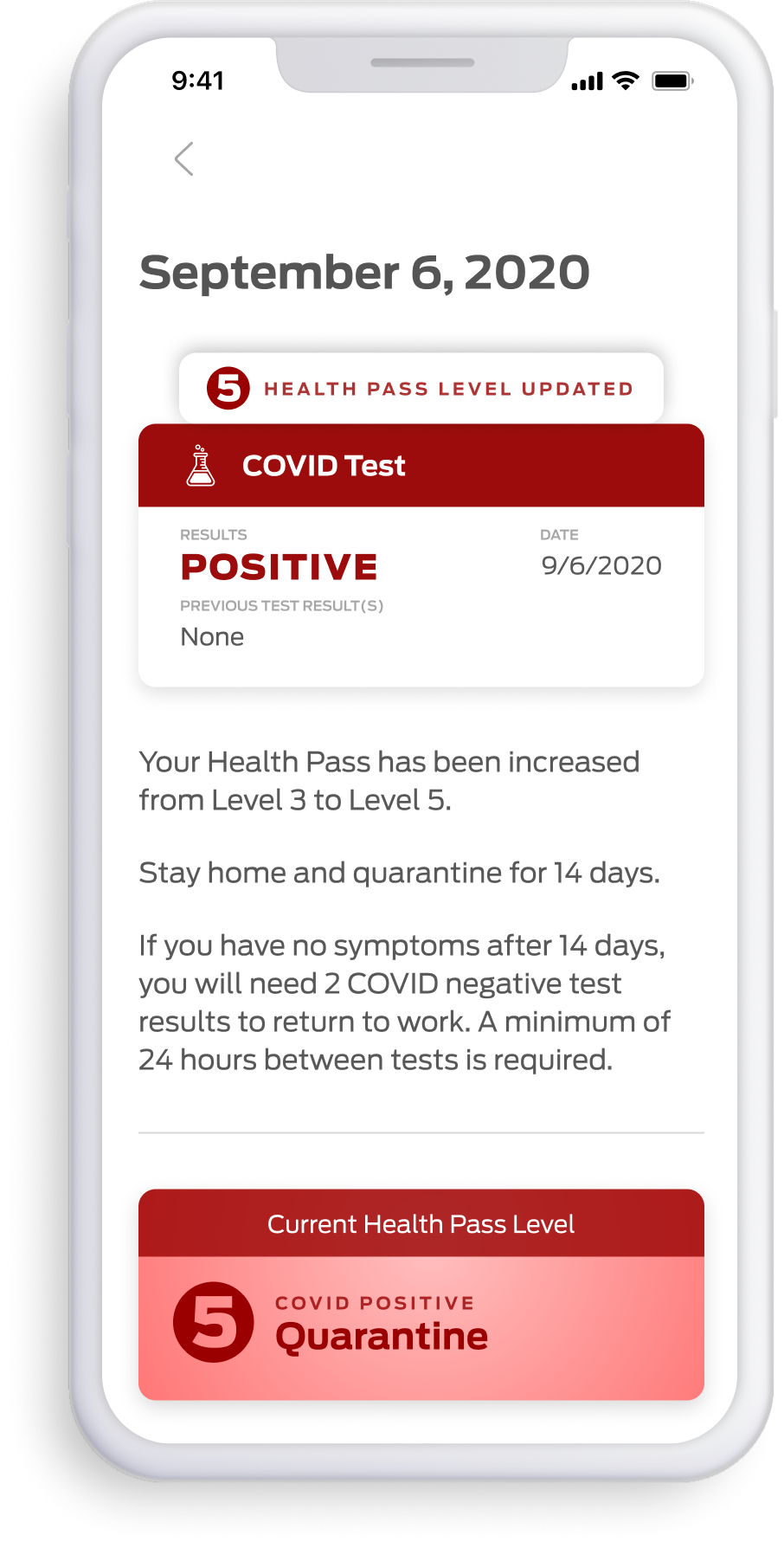
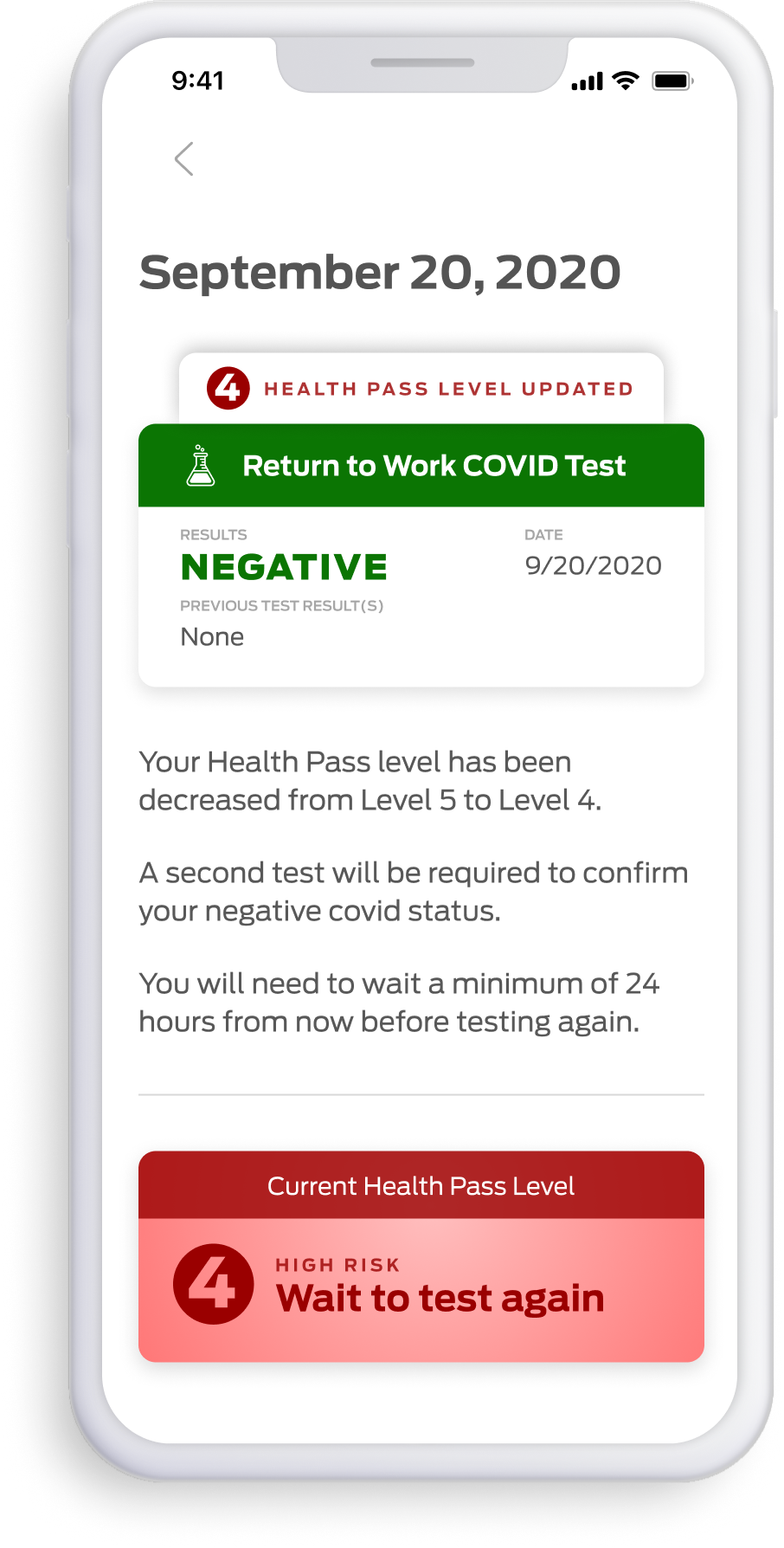
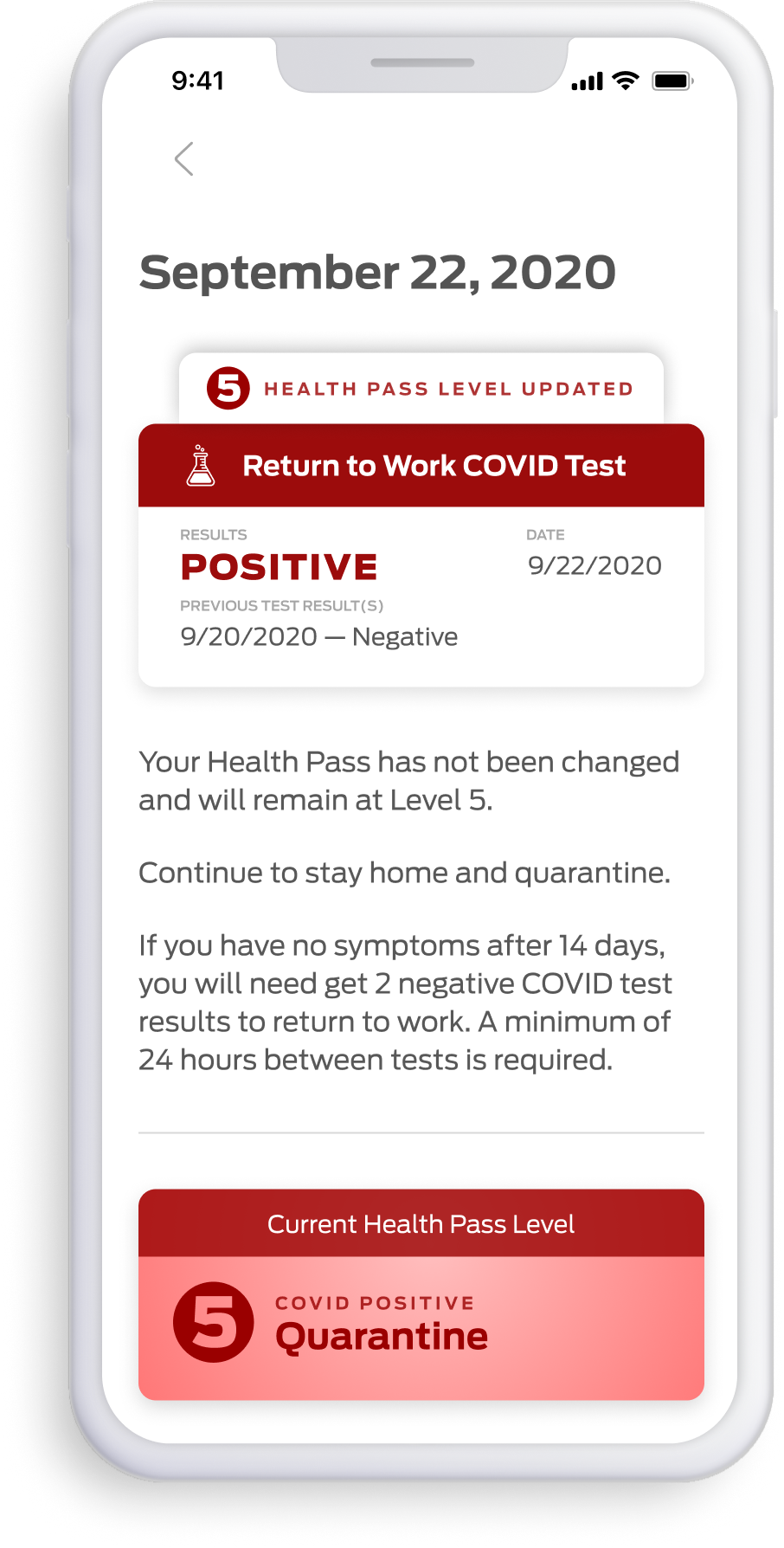
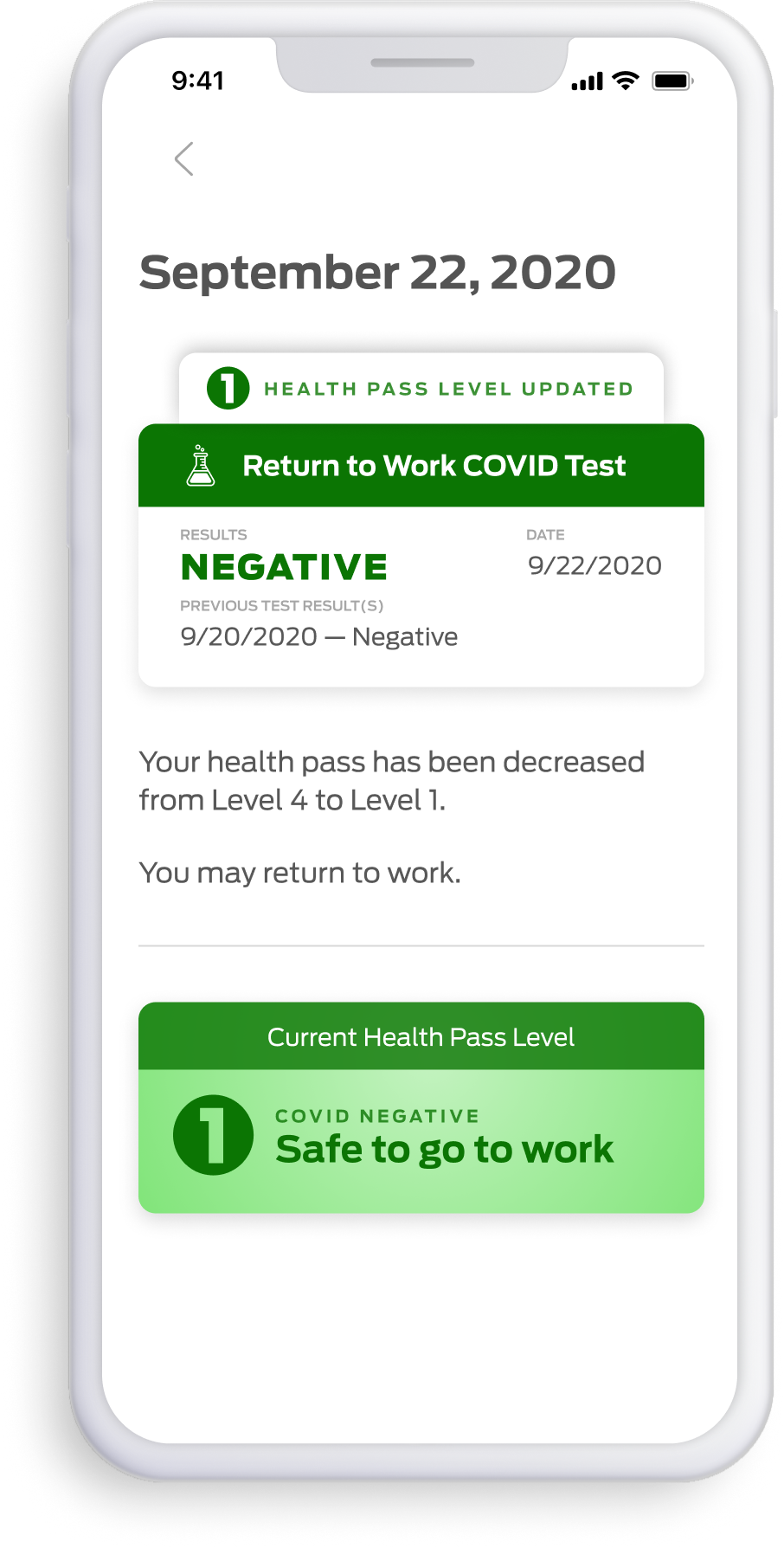
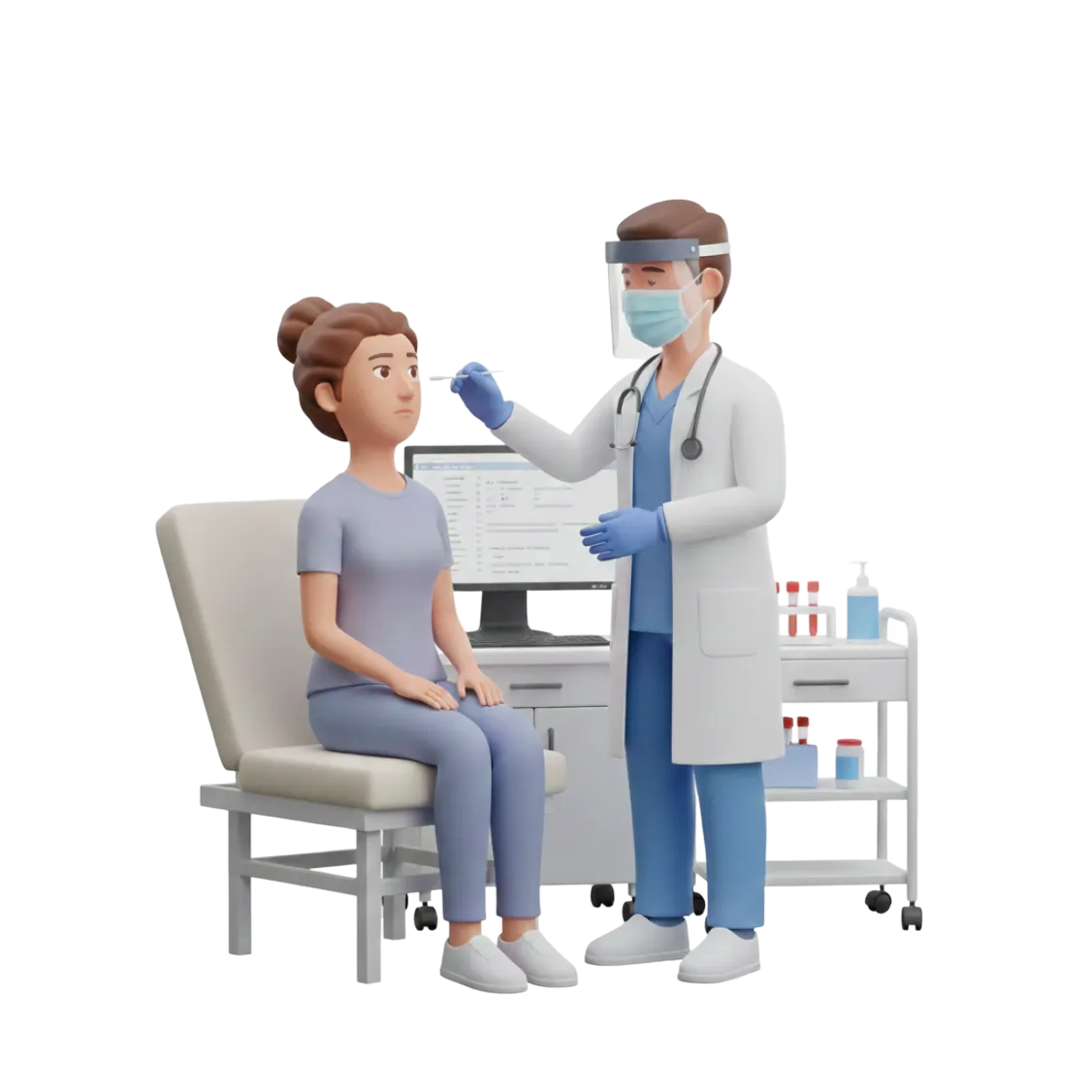
COVID tests from a healthcare provider

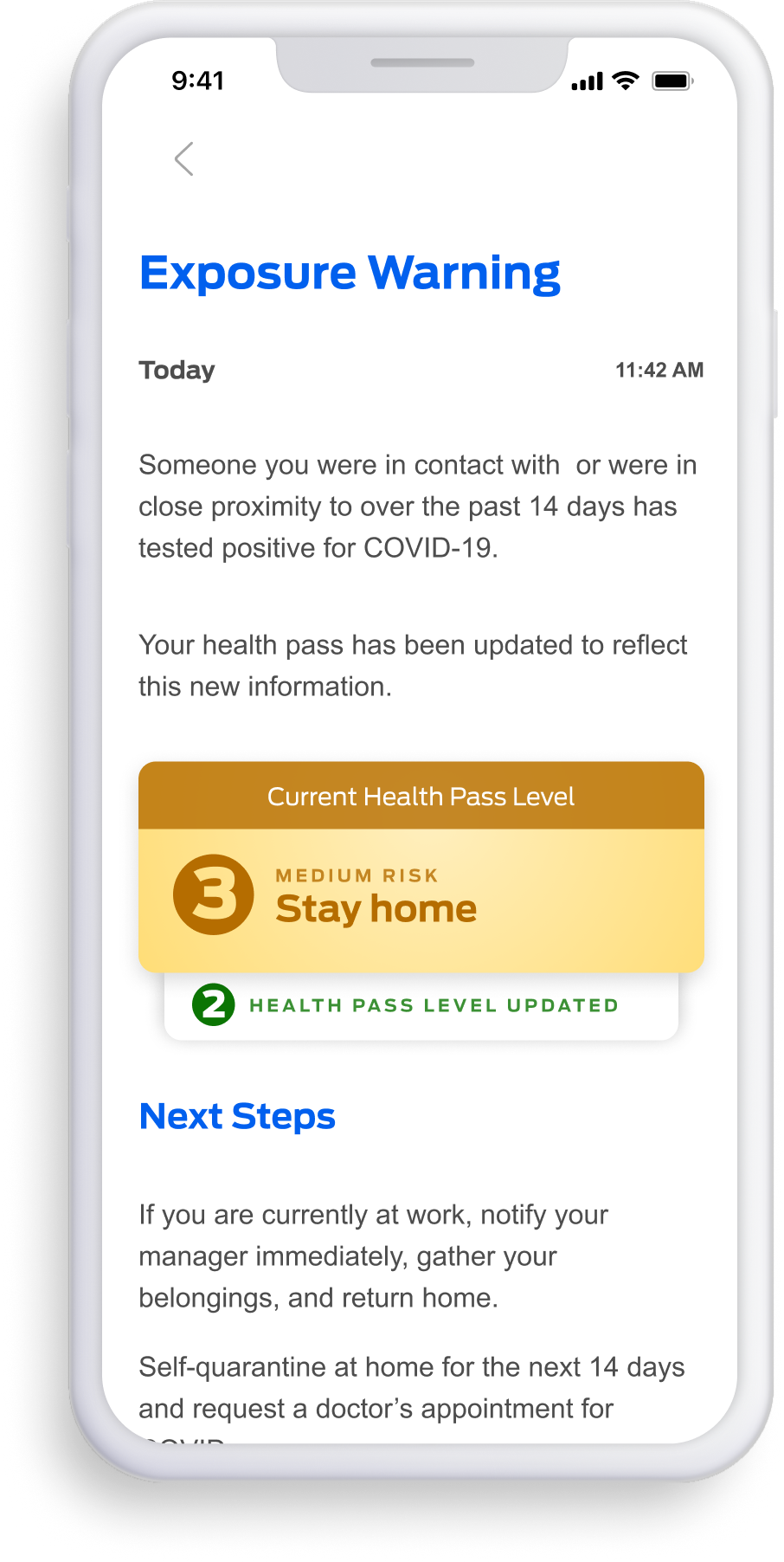
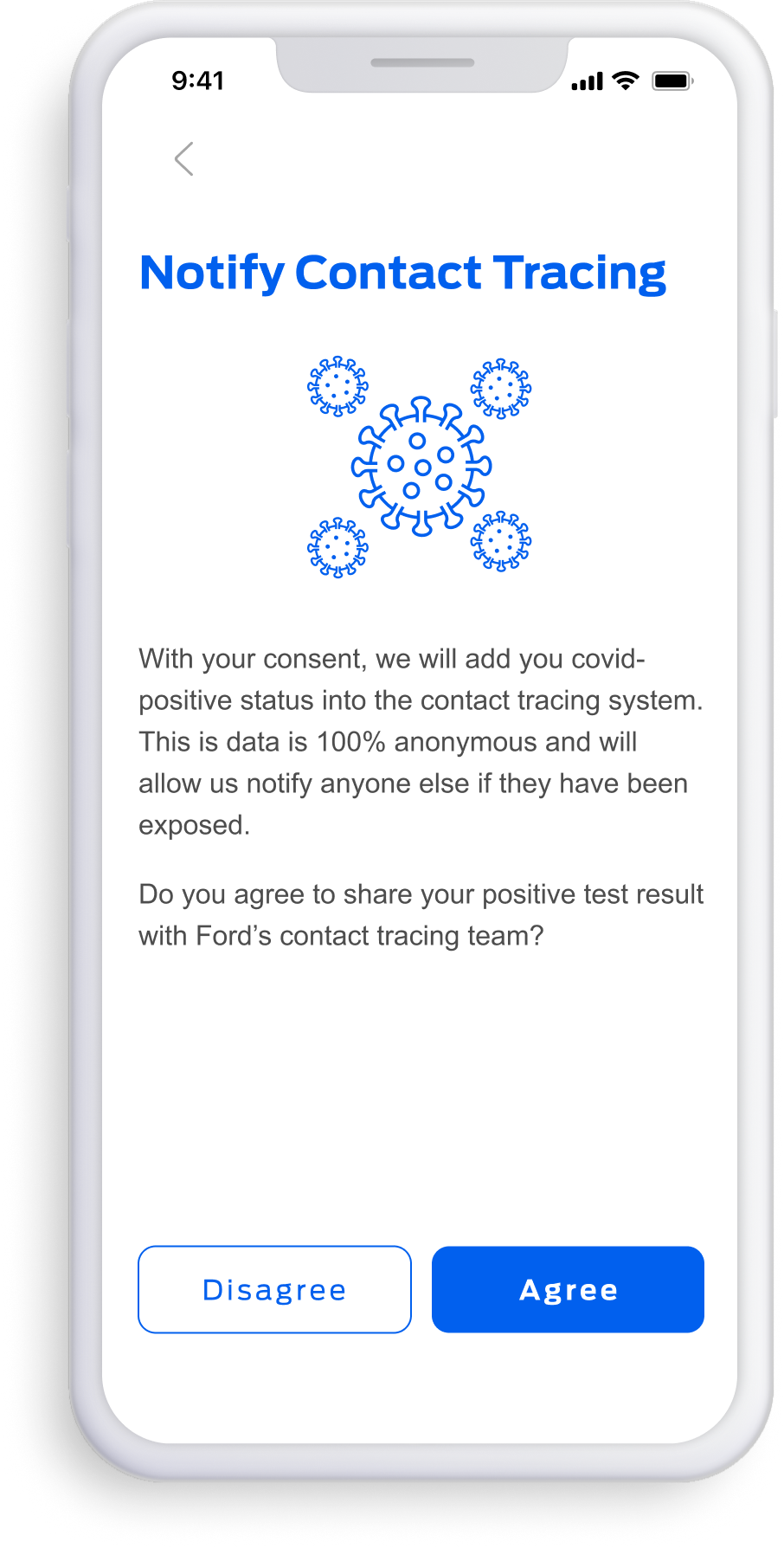
Exposure warnings
Detailed Health Pass history
design process
System Mapping
This project started with a set of technical requirements and constraints, determined by the underlying blockchain technology.
It was important to understand the system well enough to build the UX around it and the UI on top of that.

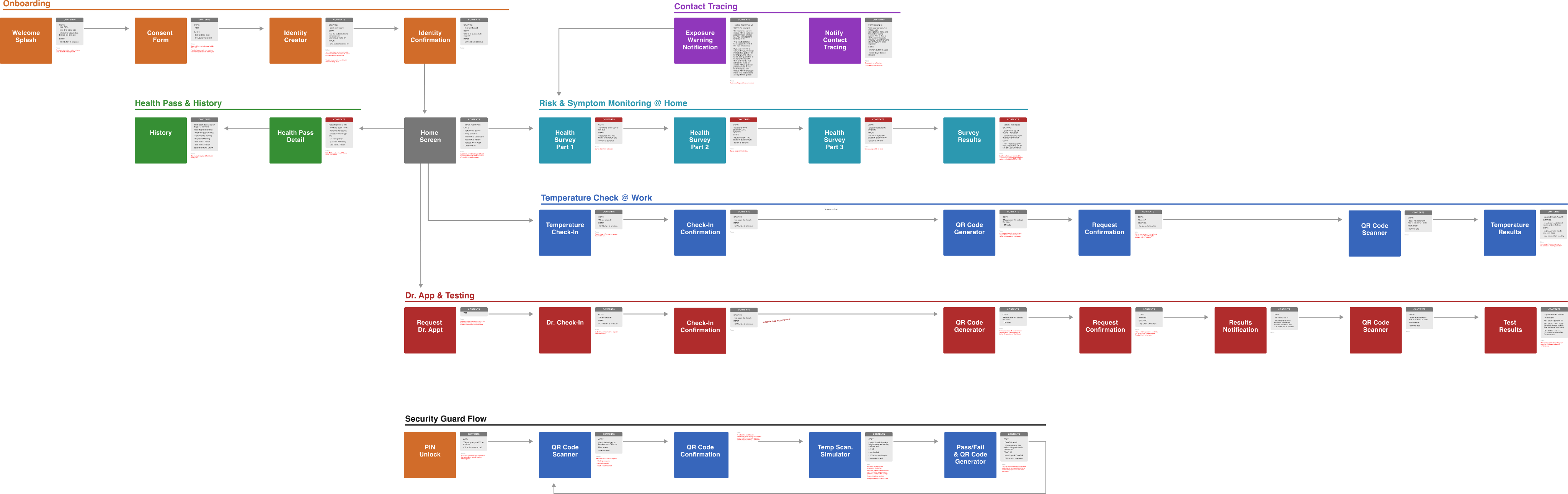
App Flows
Due to timeline constraints, development had to begin before UI designs were complete— which made it especially important for us to thoroughly map out the app and core UX flows before getting into wireframing and visual design.
Design Iteration
Making decisions about the UI were largely driven by the fact that people don’t understand or need all the technical parts and terminology of the system behind the app— the focus was on simplifying the experience and making it user friendly.
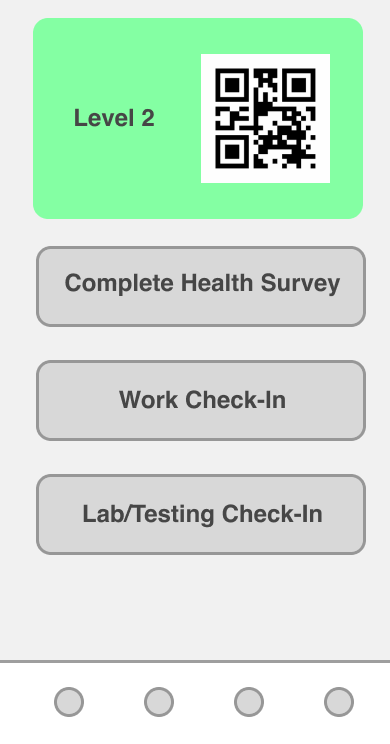

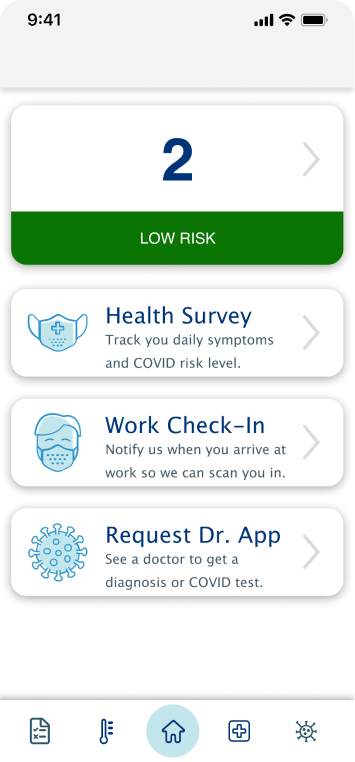
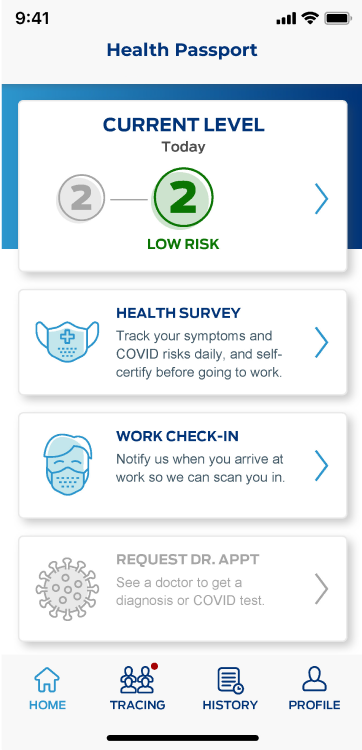
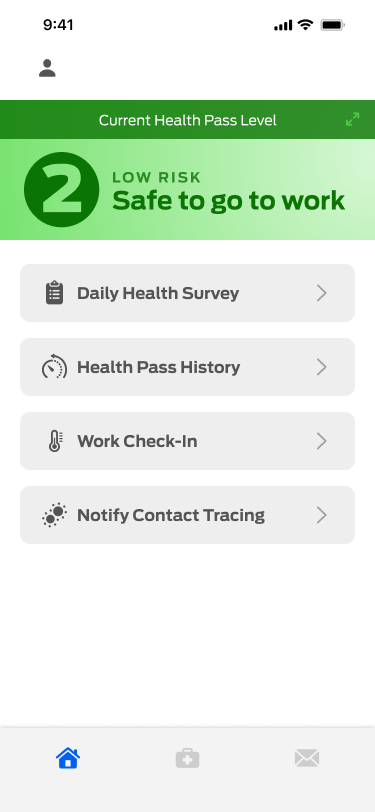
- Only include what’s necessary
- Break things down into smaller digestible parts
- Explain things using plain language
- Turn invisible concepts into tangible content
- Use iconography and illustrations to support text
- Leverage existing patterns (e.g. green = “good, red = “bad”)
User Testing
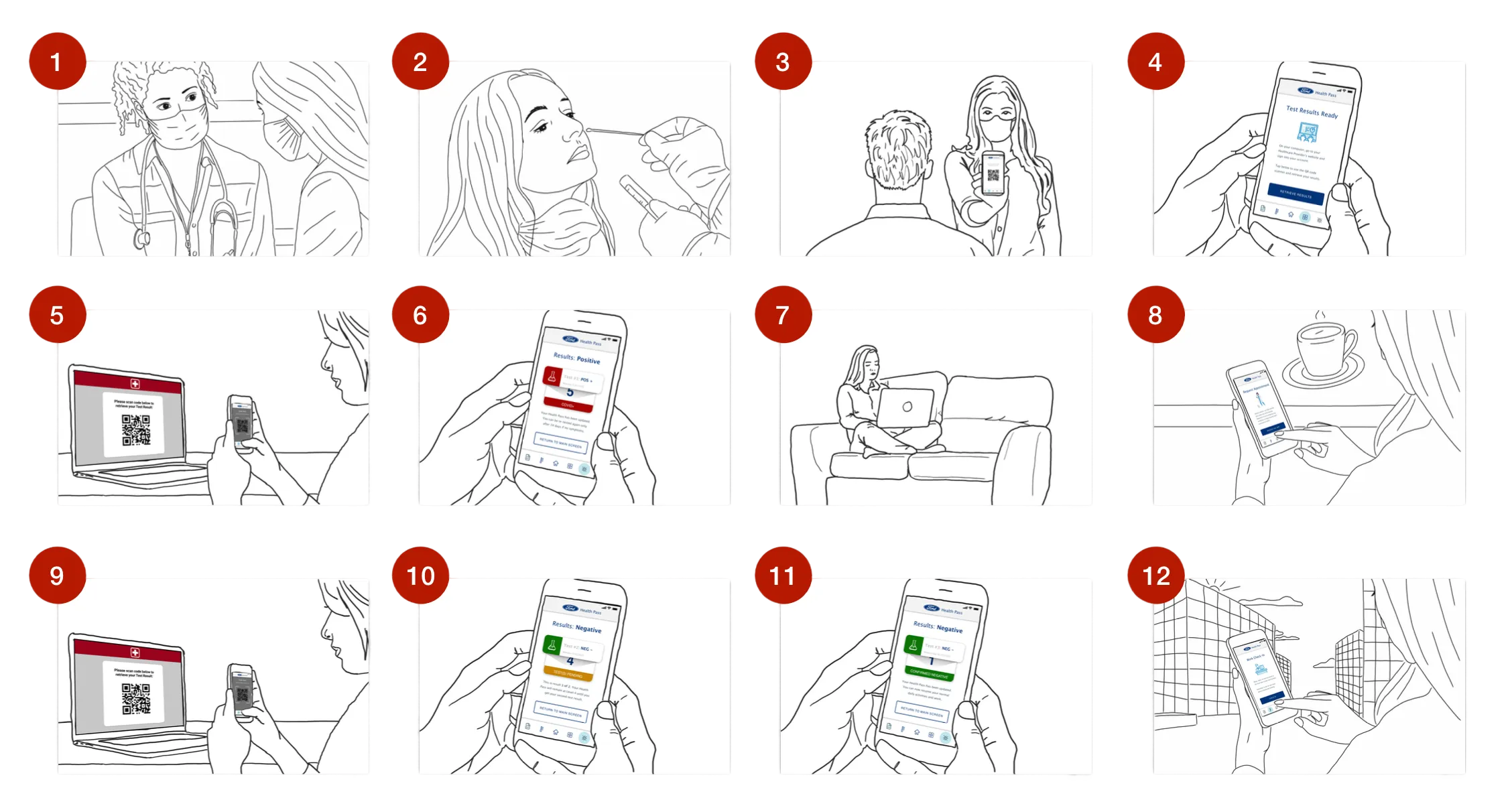
This project was done entirely remotely, so we created storyboards to paint a believable picture of the context the app would exist in for user research sessions.
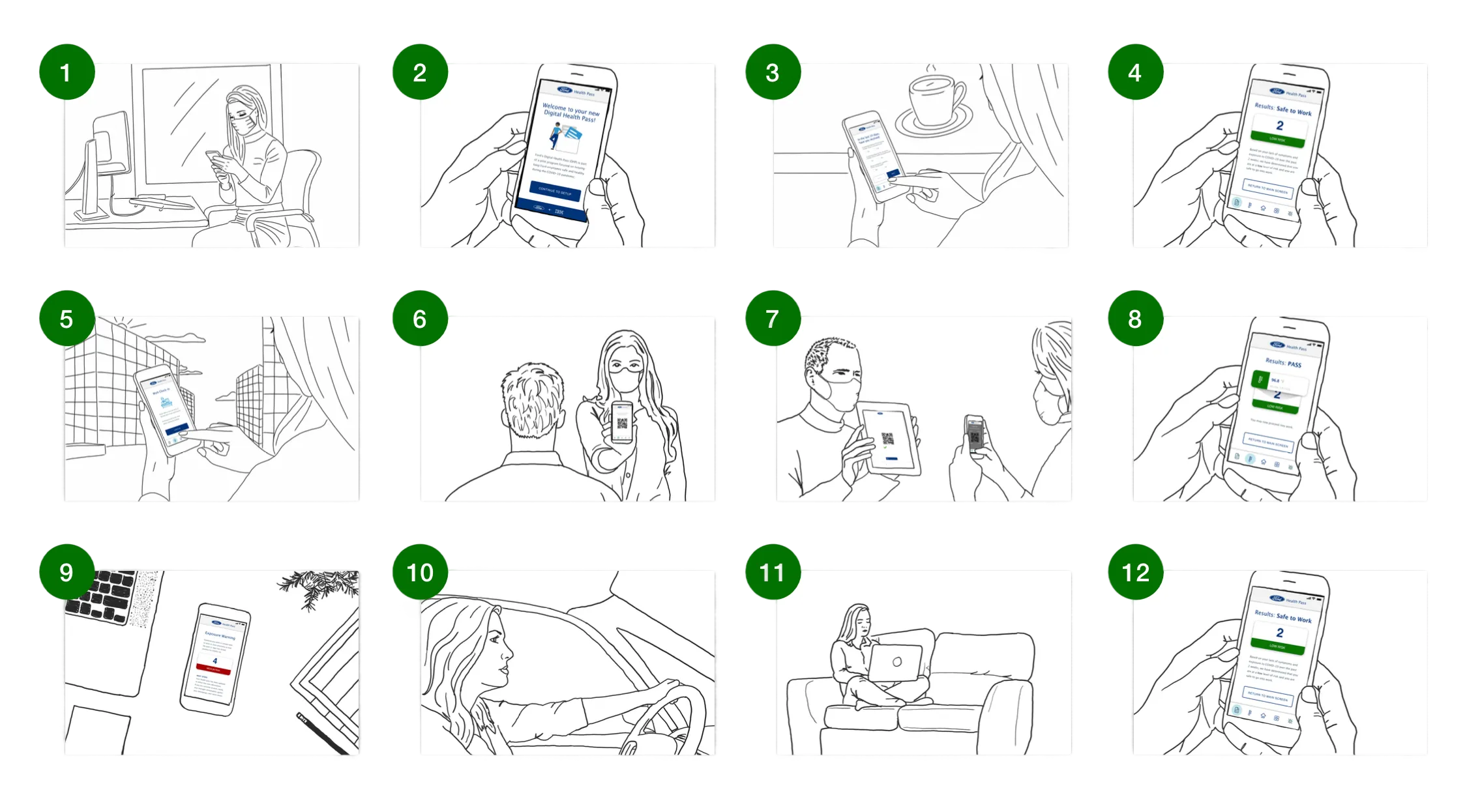
Happy Path (COVID Negative) Experience
Unhappy Path (COVID Positive) Experience
Learnings & Outcomes
People have more trust than we give them credit for— both in their employer and the other people around them
While it’s important to solidify the technology and systems behind an experience first, it shouldn’t be a 1:1 translation when it comes to building the user interface on top of that
People are more concerned with the practical and logistical aspects of contract tracing than the data-privacy