
Escape to Neverland • Immersive Experience
Creating shared transformational experiences for overnight guests with immersive themed environments and activities.
Project Objective
Create a fully immersive and personally transformational overnight experience for 2 Airbnb guests built around the theme of an existing fairytale.
role
Production Designer
timeline
6 weeks
core team
1 Writer
1 Producer
1 Architect
Key Skills
Multi-sensory experience design
Production design
Storytelling
Narrative design
Character design
Script writing
tools & methods
Journey mapping
Moodboards
Physical prototyping
The Experience
Escape to Neverland is an overnight immersive Airbnb experience where two guests are transported to Neverland for a night full of fun activities, exciting adventures, unexpected surprises, and meaningful moments.
Aided by the resident House Fairy, guests are taken on a journey to keep up with the Lost Boys, escape the tricks of Captain Hook, explore the magic of their own imaginations, and ultimately deepen their relationship through connection, collaboration, and care.
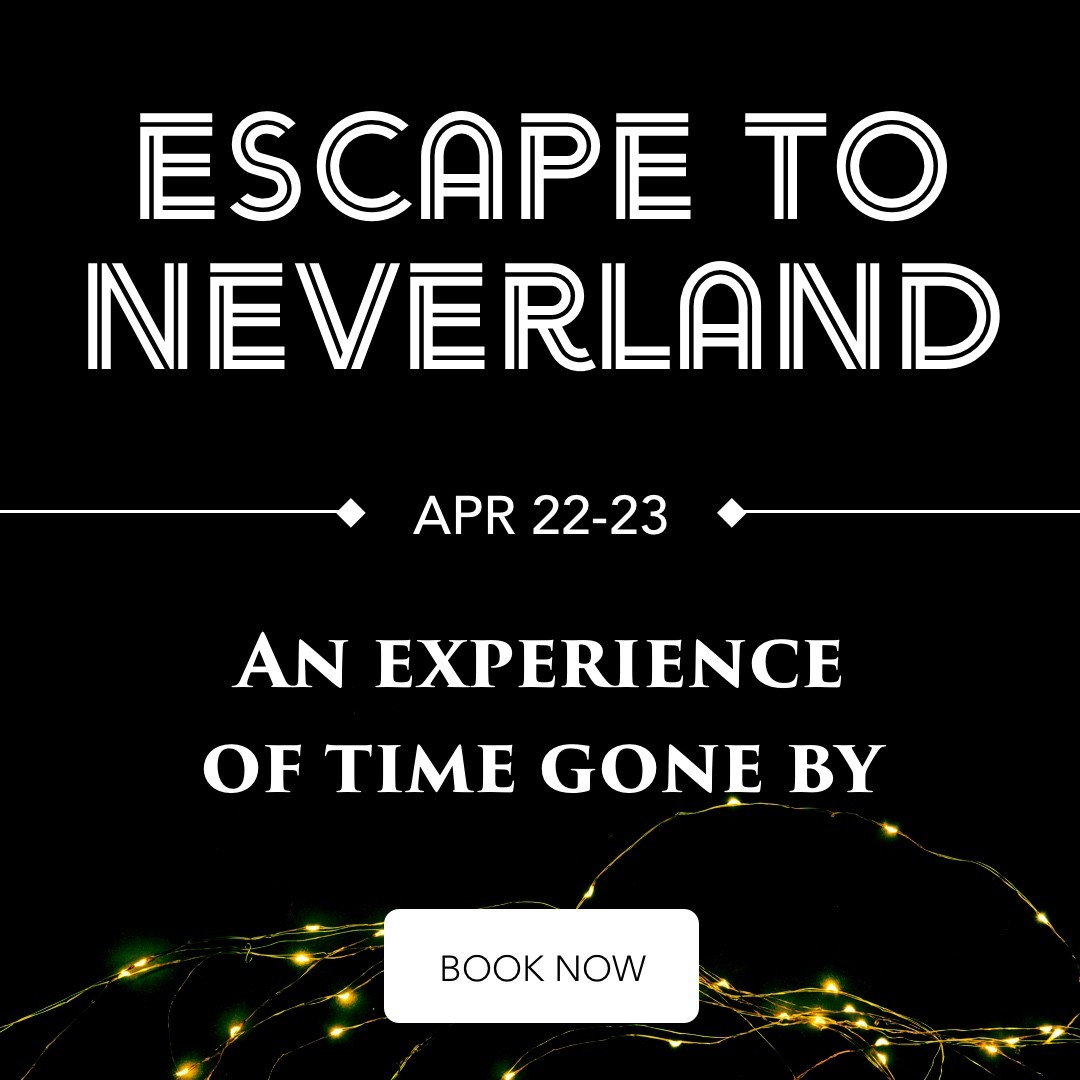

2 guests, 1 night
Escape to Neverland
Escape to Neverland is an overnight immersive experience for you and your partner. A weekend getaway filled with unexpected wonder and curiosity that will make you forget all about #adulting. Enjoy Airbnb-quality hosting in addition to a series of other fun and engaging activities included in this unique overnight experience.
We will ask you a series of questions during the booking process— please do this separately and not together.
From there, you can enjoy an immersive experience that transports you and your partner straight into the childlike atmosphere of Neverland. Discover new things about yourself and your partner and learn to truly embrace the youth and wonder that you may have left behind after years of being an adult.
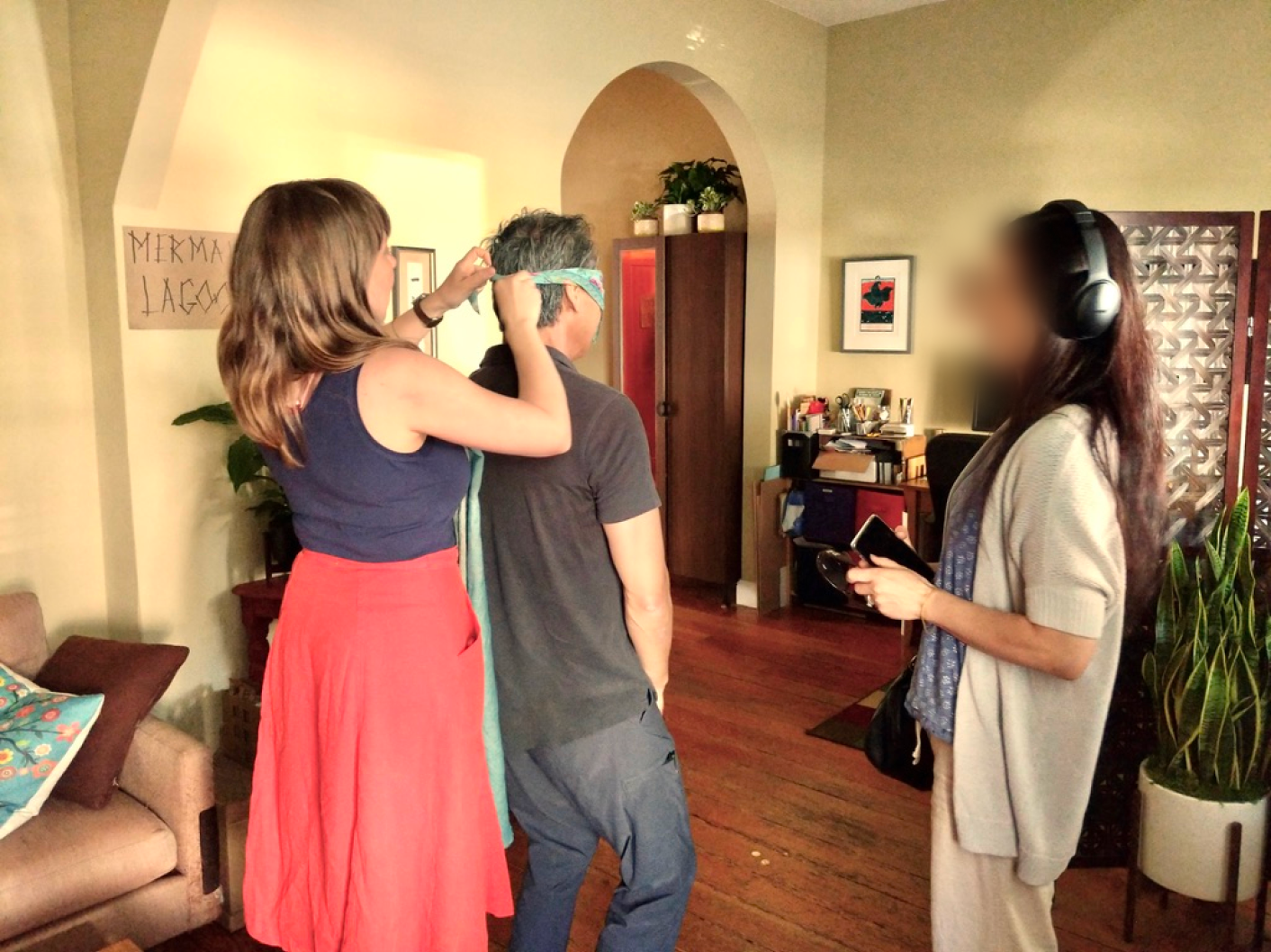
- Welcome & World Transition
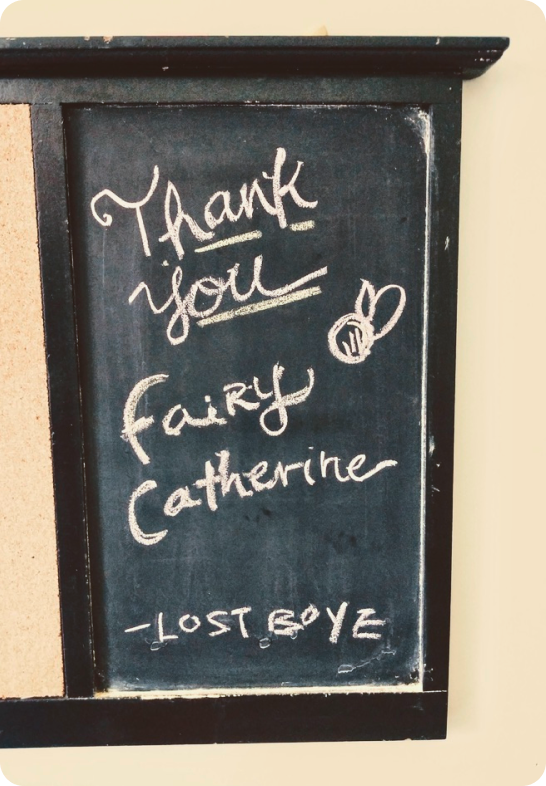
When guests first arrive, they‘re greeted by the House Fairy Catherine. She takes their cellphones and replace them with Memory Boxes (disposable cameras) instead. One guest is then blindfolded and the other is given noise-cancelling headphones before the tour.
PURPOSE:
- Draw a boundary between the “real” world and the fantasy realm
- Create a transitional experience for context-switching
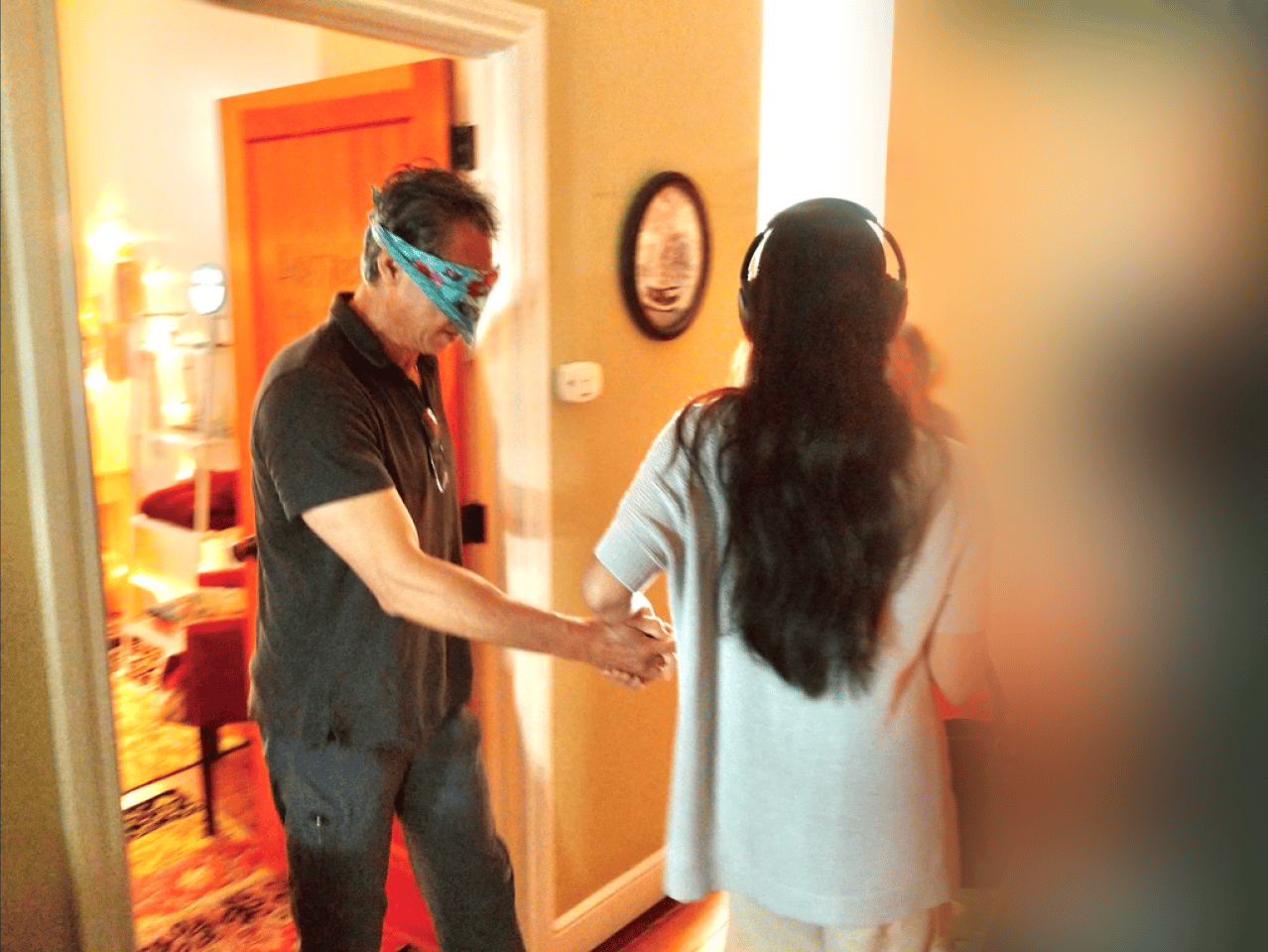
- Sensory-Deprivation Tour
The guests are given a tour of the house and told how to navigate the rest of the experience. Afterwards, they must work together to remember and communicate to each other which parts of the tour they could each see or hear.
PURPOSE:
Begin the process building trust, connection, and collaboration between the guests
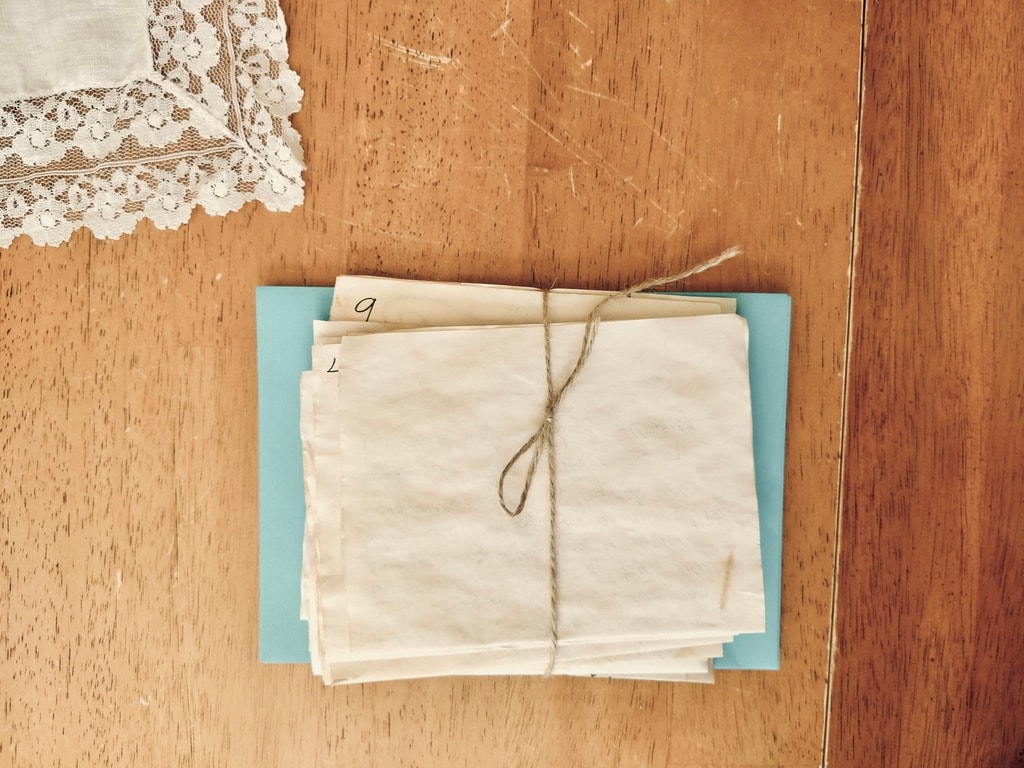
- Neverland Notes
After the tour, the guests discover a note from the Lost Boys, telling them what to do next. Throughout the experience, whenever the guests hear a bell ring, they discover a new note.
PURPOSE:
Provide an asynchronous presence and connection to other characters within the Neverland fantasy world without live actors. Also important for pacing, giving guests one thing to focus on at a time.
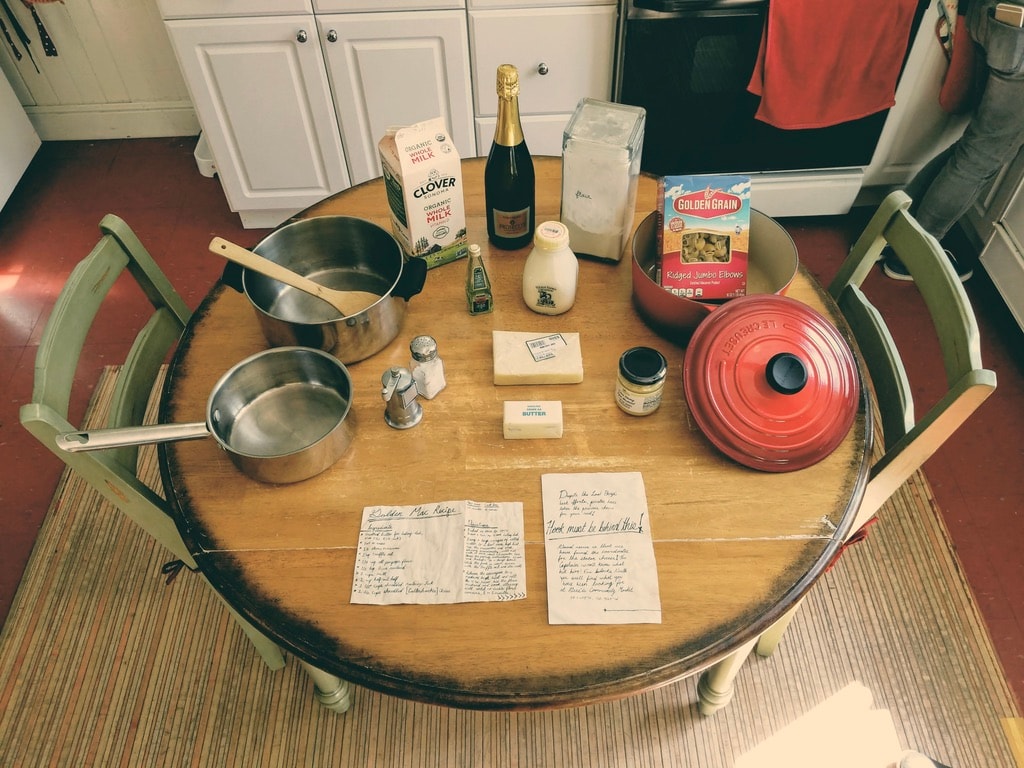
- Cooks Galley - Stolen Cheese!
As dinner time rolls around, the guests are informed that the Lost Boys are gathered supplies for dinner and share a recipe for a nostalgic classic: Mac ‘n Cheese. But the guests soon discover that Captain Hook has stolen their cheese! They are sent out on a quest to retrieve it.
PURPOSE:
Bring another world character into the story and gives the guests an excuse to leave the house in case they’re getting a bit stir crazy or want some fresh air.
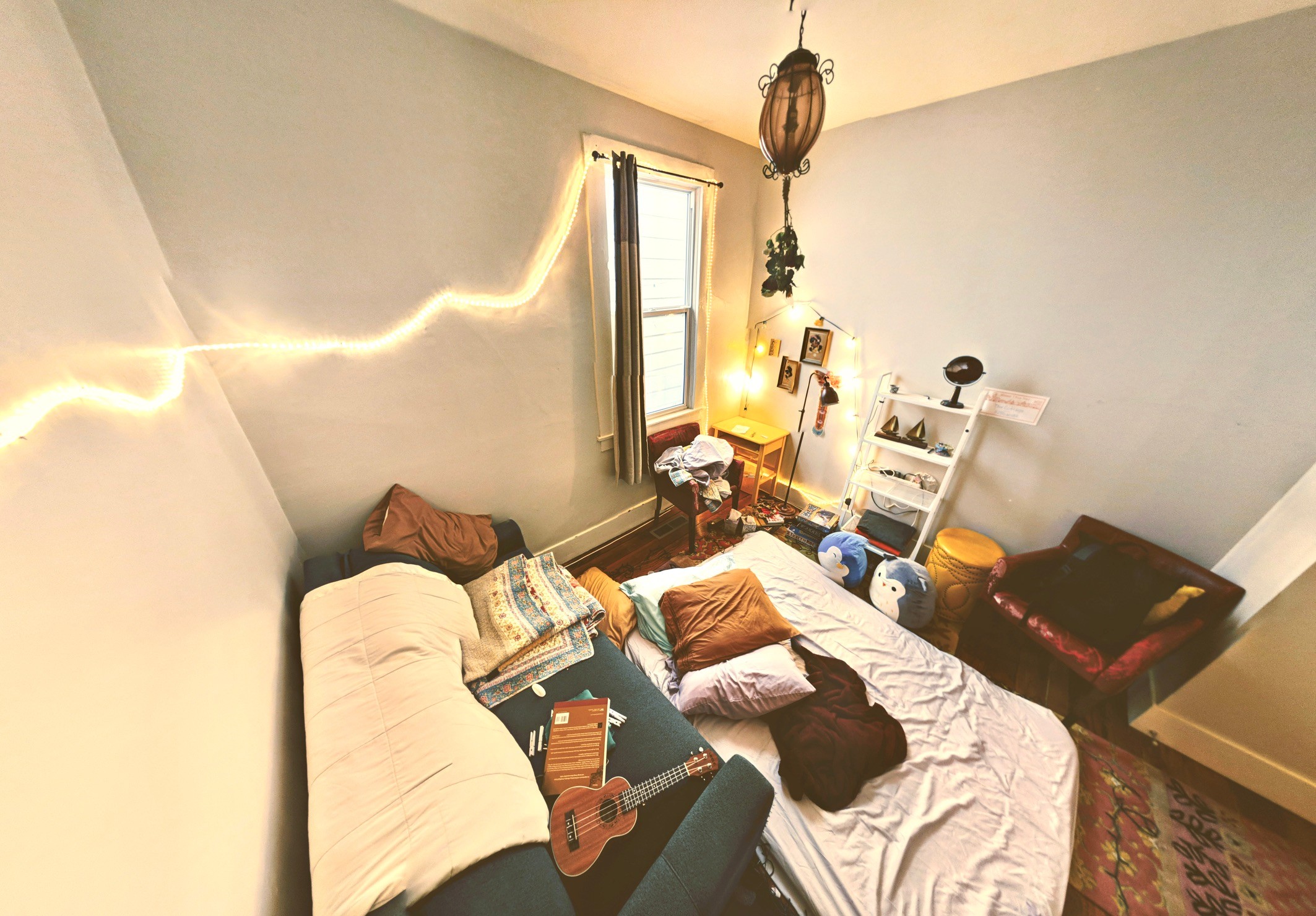
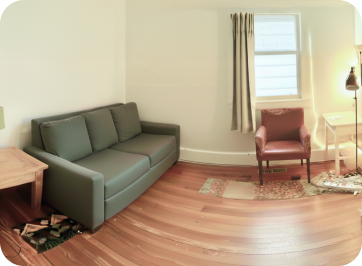
Room when guest arrived
- Lost Boys Hideout - Blanket Fort
While dinner is in the oven, the guests receive a note from the Lost Boys telling them to return to the Hideout. It’s getting dark and they must build a shelter for the night. When they arrive, the room is not what it was before. An array of supplies, including blankets, pillows, fairy lights, and more, have magically appeared for them to use. As they build their fort, music start to drift in from the hallway.
PURPOSE:
Immerse guests in the quintessentially “childhood” activity of building a blanket fort, encouraging continued connection and collaboration.
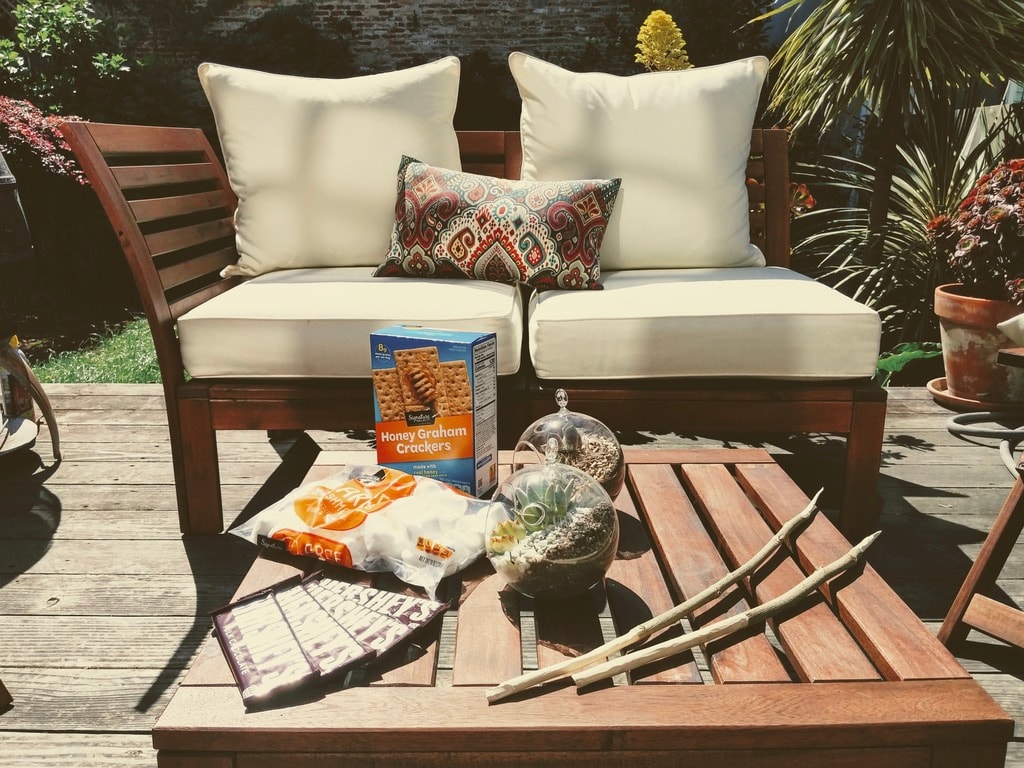
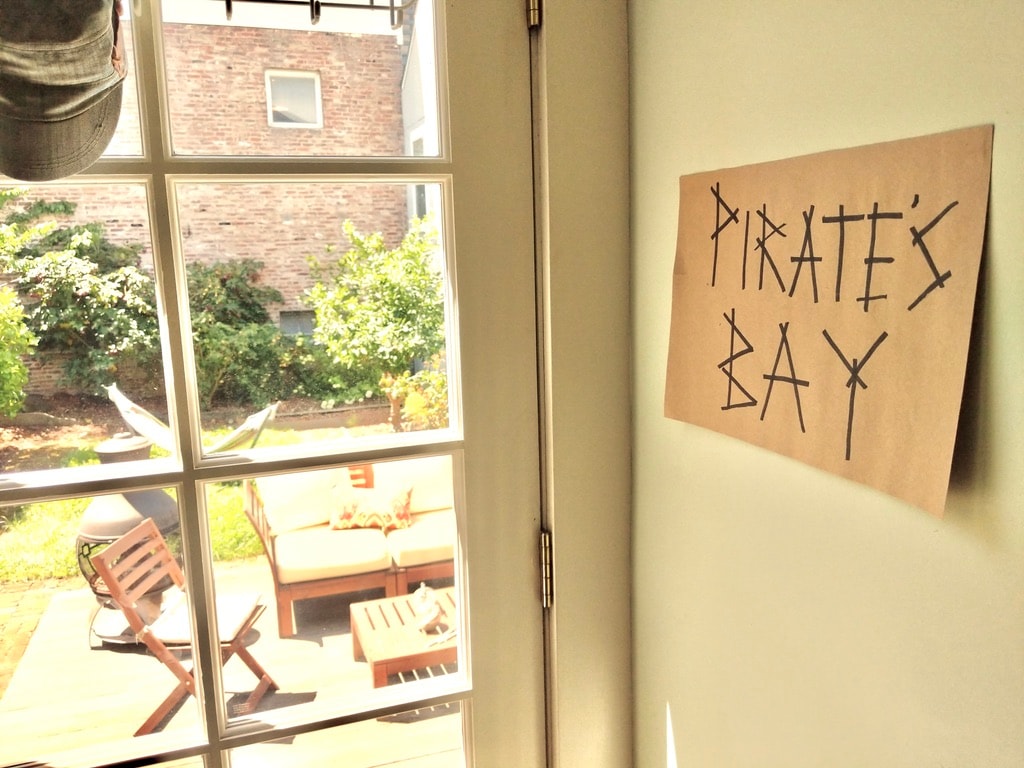
- Pirate’s Bay - S’mores
After dinner and as the night is settling in, the guests receive an invitation from the Lost Boys to visit Pirate’s Bay for some fire-roasted s’mores.
PURPOSE:
Immerse guests in the quintessentially “childhood” activity of making s’mores and having a sweet treat before bed.
- Midnight Mischief
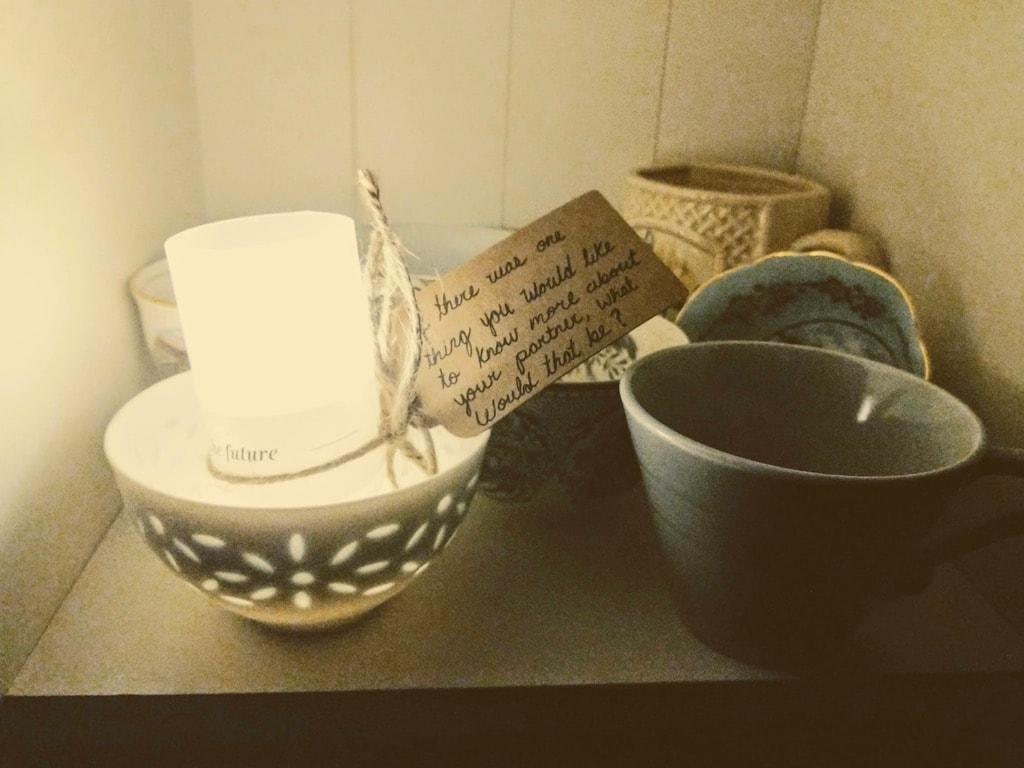
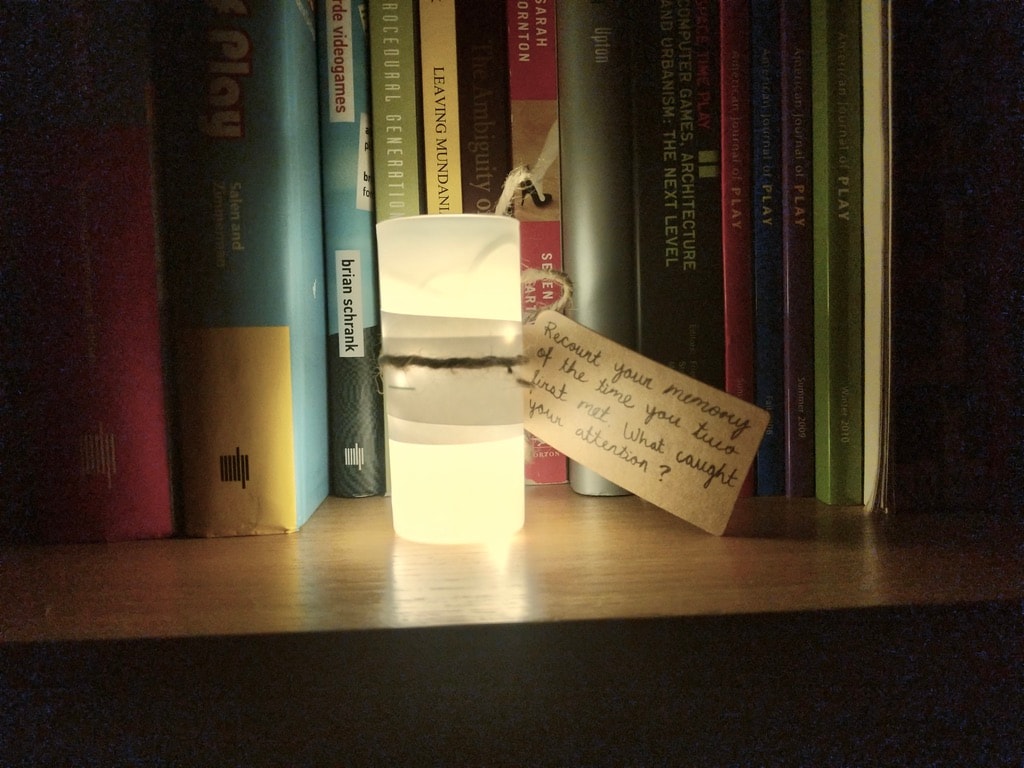
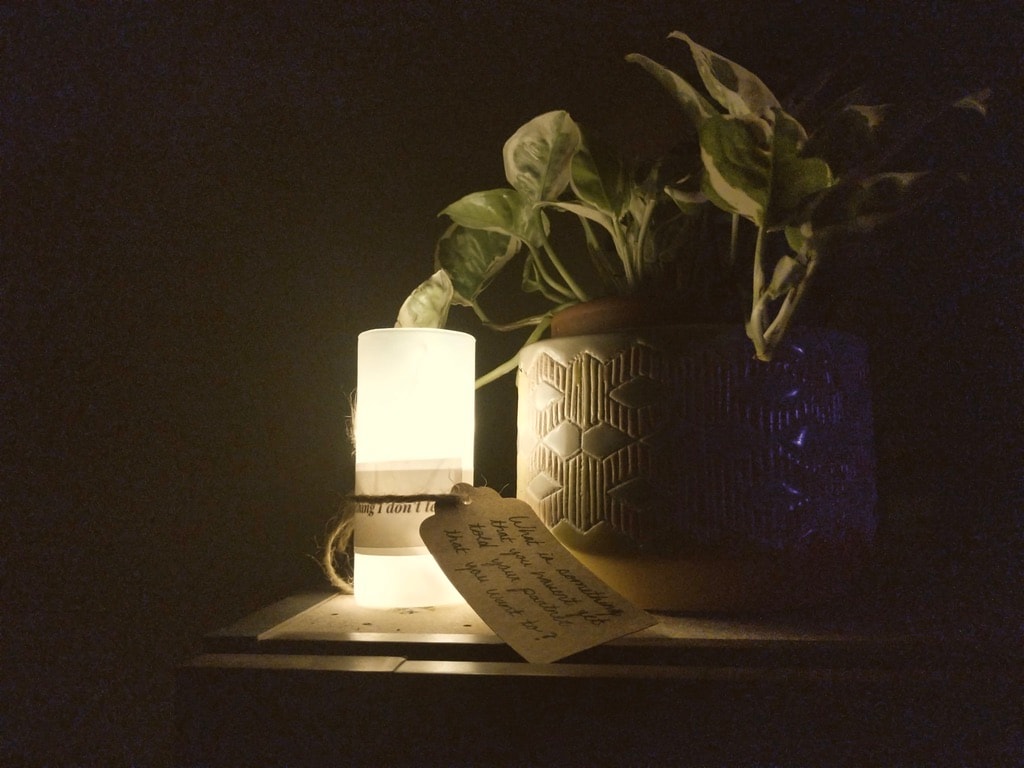
In the middle of the night, the guests are suddenly woken up by an alarm clock hidden in the room. In their groggy state, they discover a treasure map and a note telling them they must collect the treasure: a series of questions about their relationship attached to fairy lights scattered throughout the house.
PURPOSE:
Introduce something unexpected and surprising into the experience, and facilitate an opportunity for the guests to dig deeper into the emotional experience and talk about their relationship.
- Morning Memories
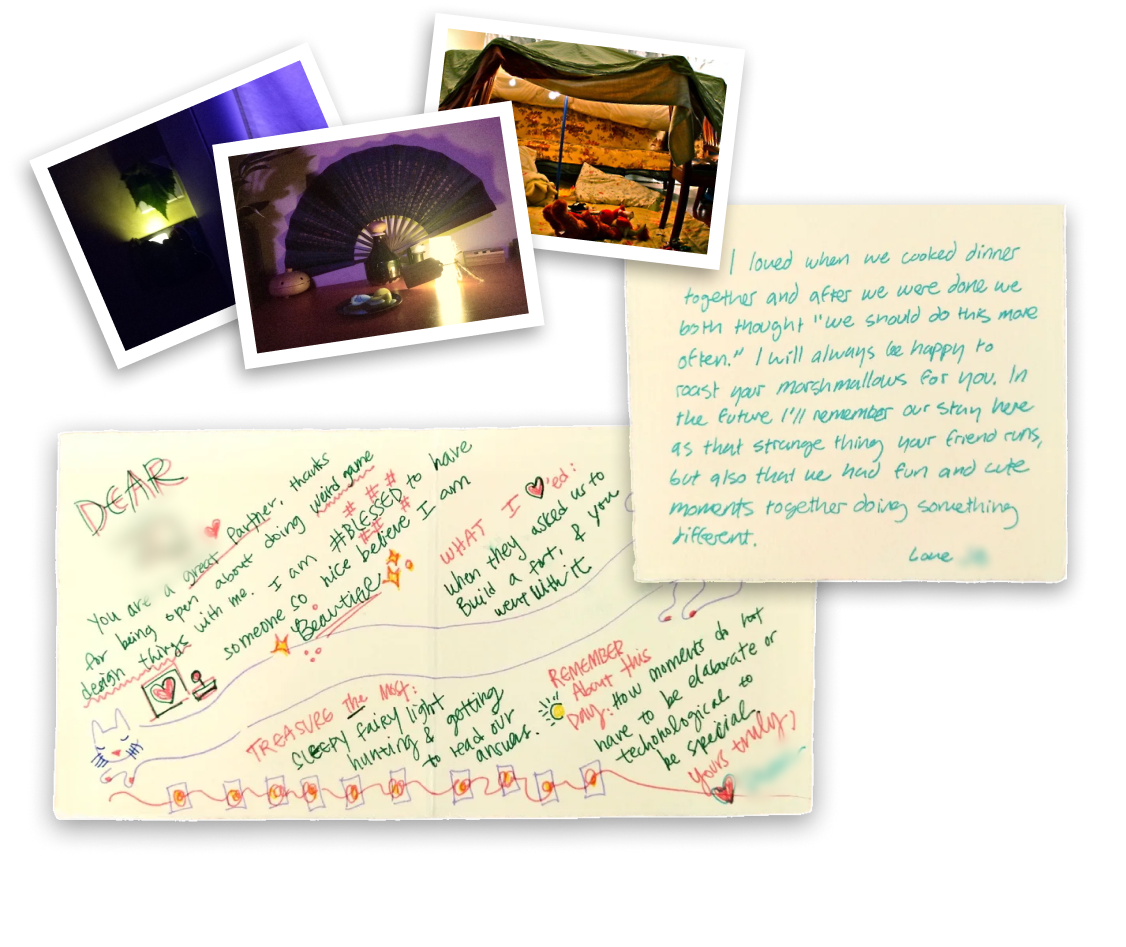
Over breakfast in the morning, the guests are given the chance to write each other a letter about their experience and return their Memory Boxes for transformation. In about a week they will receive an envelope containing their memories and the letter from their partner.
PURPOSE:
Give the guests a chance to reflect on their experience but also create something tangible that they can keep from it— experiences often end up feeling ephemeral when you’re caught up in the act experiencing them instead of focusing on trying to remember them.
central question (transformational objective)
The traditional theme behind Peter Pan, Neverland, and the Lost Boys is the idea of never growing up, and while we definitely wanted to lean into the playful and nostalgic side of that theme, we also wanted to create a meaningful experience that would be valuable abd impactful for two mature adults as well.
How might we create a transformative experience for guests built on trust, discovery, and imagination?
Inspiration & References
We started pulling together references for things that felt like they spanned both the magic and freedom of childhood, and the intimacy and comfort of a mature adult partnership.
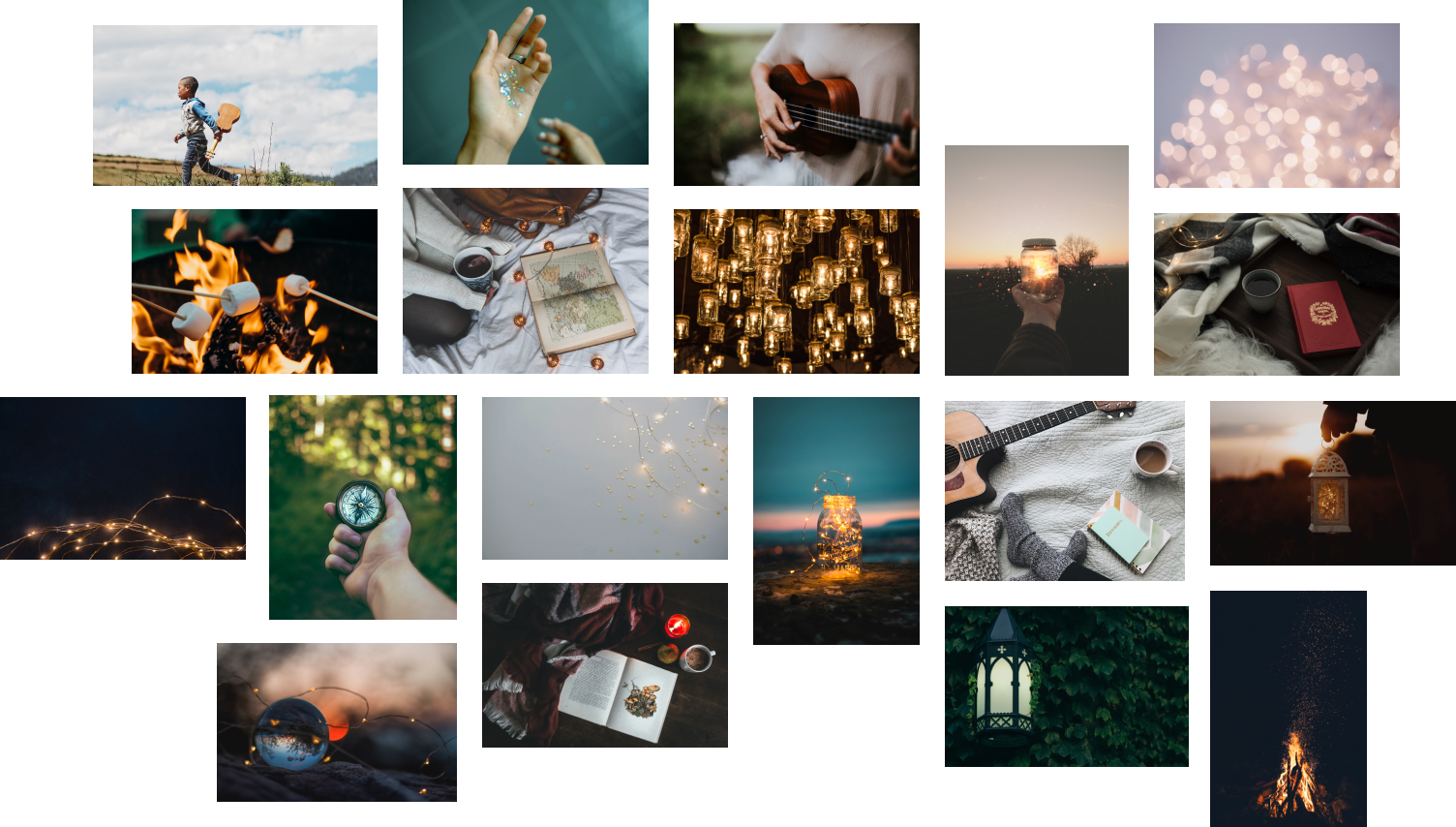
Script Writing
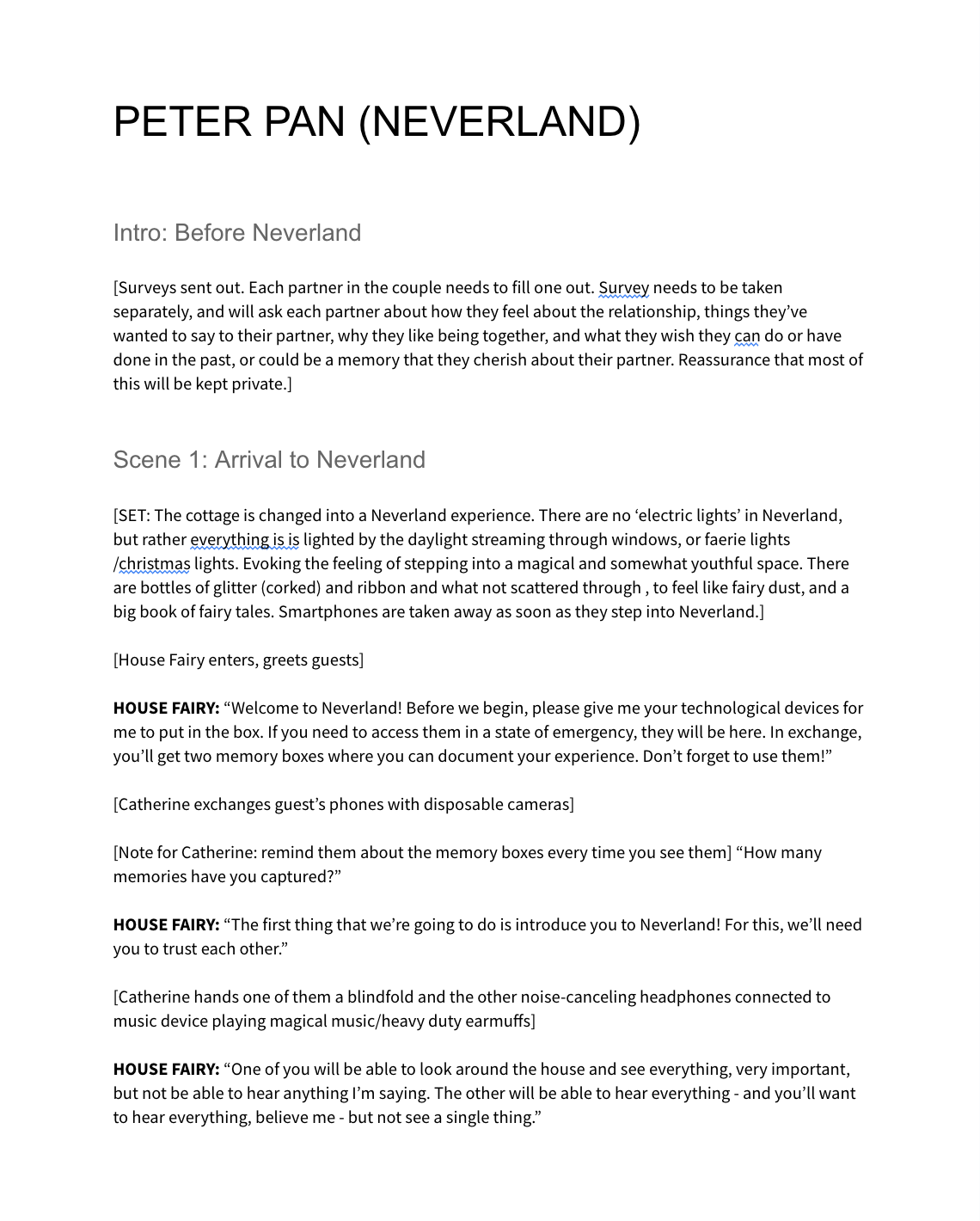
In a lot of ways, designing for an emotional time-based experience is very similar to putting on a theatrical play. or show. Because of this, we naturally gravitated towards outlining the experience in the form of a script and iterating on our ideas in writing.
Front of House vs. Back of House
Using the script format, we were able to lay out the “front of house” events or activities for guests in a series of sequential scenes, while also documenting the details and directions for everything and everyone in “back of house” at the same time.
A Portable Plan
The other benefit of using an 8.5” x 11” script instead of storyboards or a journey map was simply that it was more practical. We could easily print out copies for everyone on the team, carry them around with us and reference them while we were working on-site, and give them to out to our actor(s).
Plot & Narrative Devices
When it came to moving the story and experiences along for our guests, we ran into a couple of problems:
No People
While the House Fairy (house owner) was available throughout the experience if the guests needed anything important, the majority of the experience didn’t involve—and therefore couldn’t rely on—interactions with other people to inform the narrative or advance the storyline.
No Text or Phone Calls
In addition to this, since the guests did not have access to their cellphones for the duration of the experience (except for emergencies), we couldn’t send them any kind of digital prompts either.
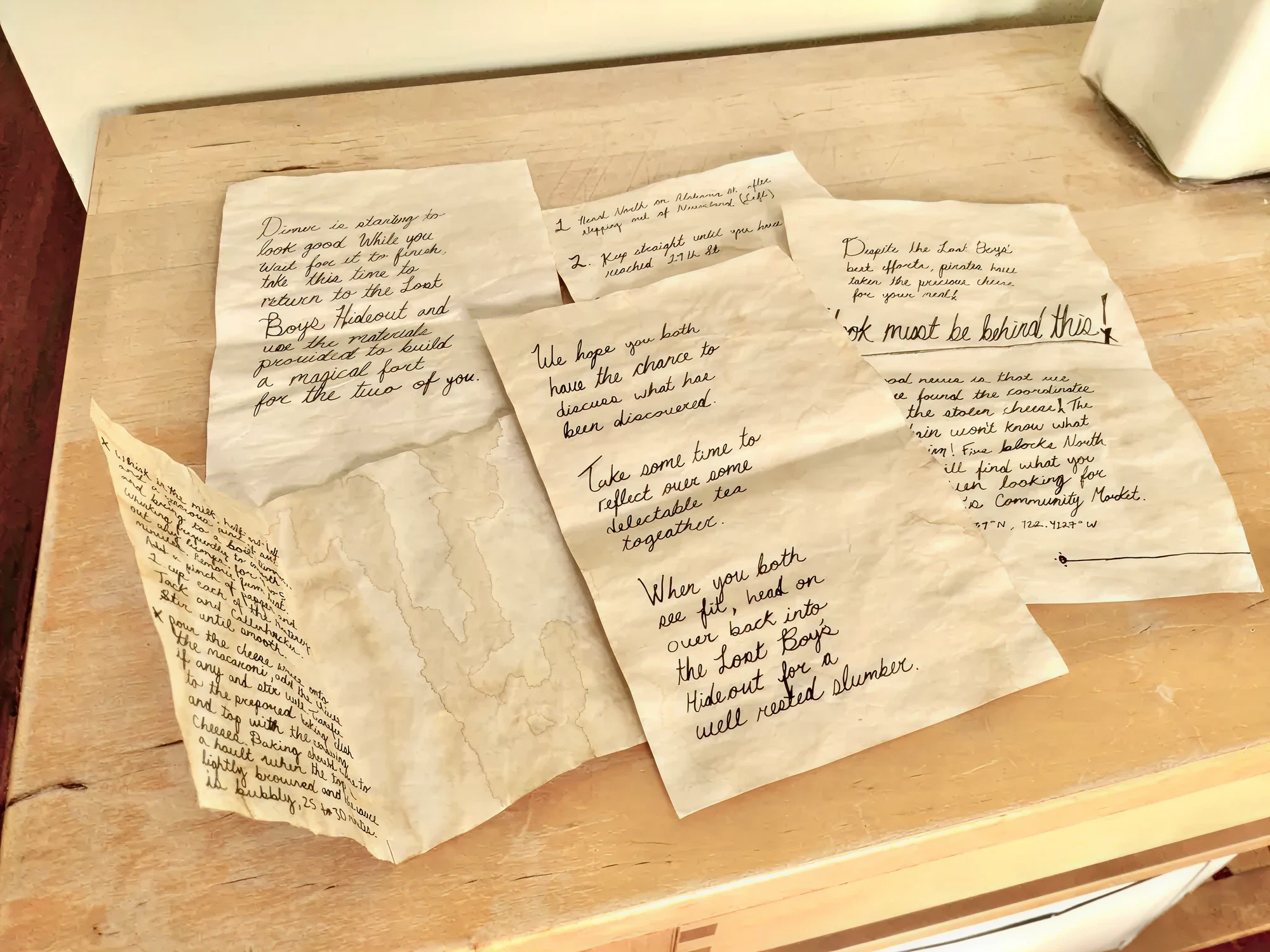
Using notes “from” the Lost Boys, we were able to move guests from scene to scene without relying on live actors or modern technology.
logistics
A lot of our challenges for this project really just came down to things related to planning and practicality.
1. Create a balance of planned guest experiences vs. free time
The entire length of the experience was 14-15 hours, but given our project timeframe it wasn’t realistic to create a curated experiences for every single minute of that time.
2. Distract guests so we can execute “magical” set changes
One thing we had to figure out was how to make things “magically” happen for the guests knowing that we had limited time, resources, technology, and people. We did almost everything by hand.
3. Allow for comfort over commitment when appropriate
While we wanted to eliminate the modern adult world as much as possible, we also recognized that (within the constraints of our project) if we committed to completely eliminating all of it that would actually have a negative impact on the guest’s experience instead. So our guests still had things like running water, electricity for lights, a kitchen, the use of money, etc.
Environment Design
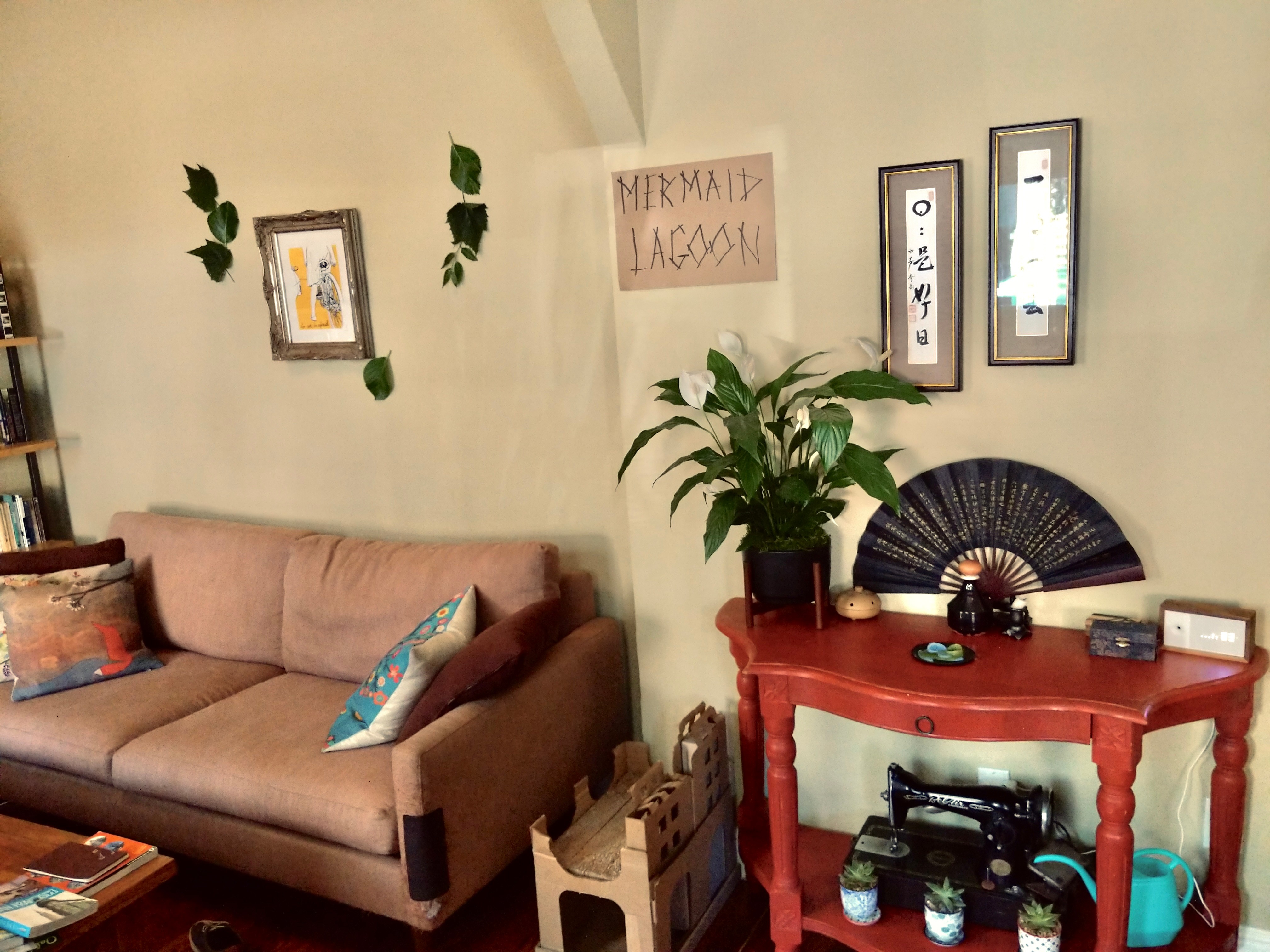
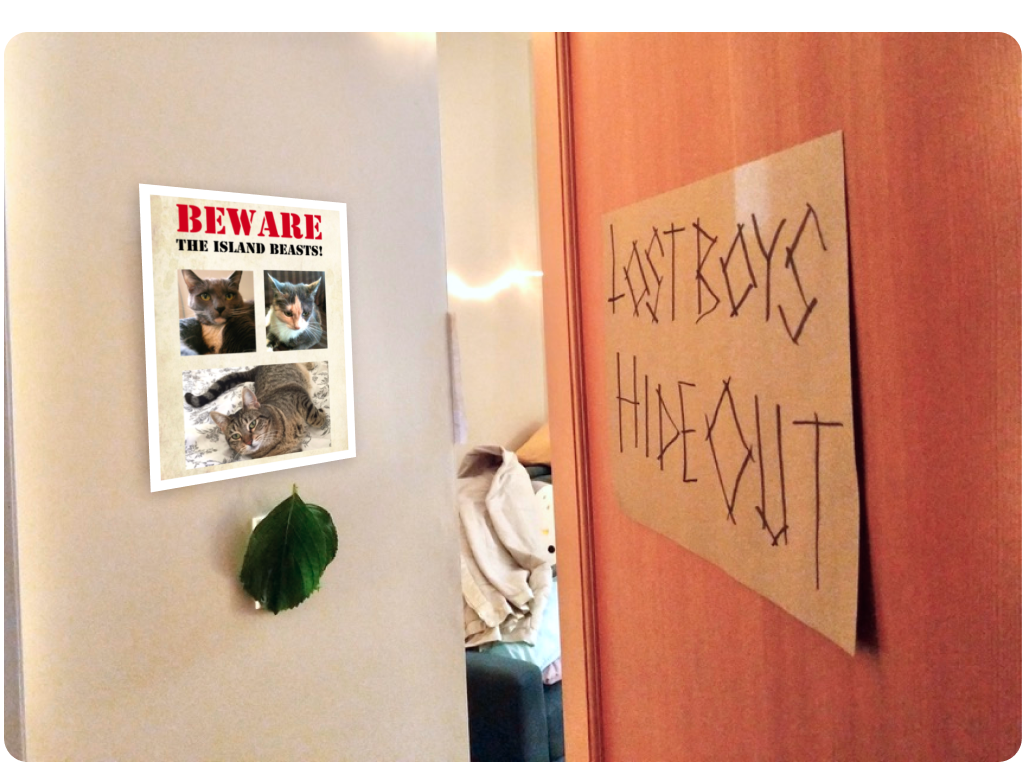
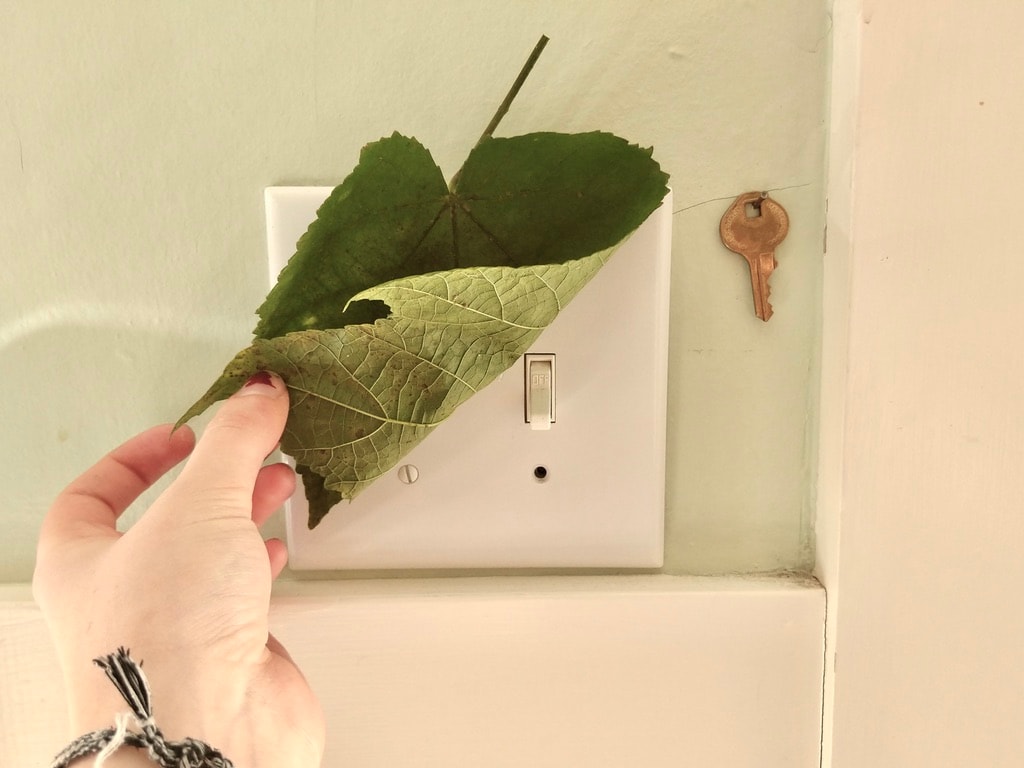
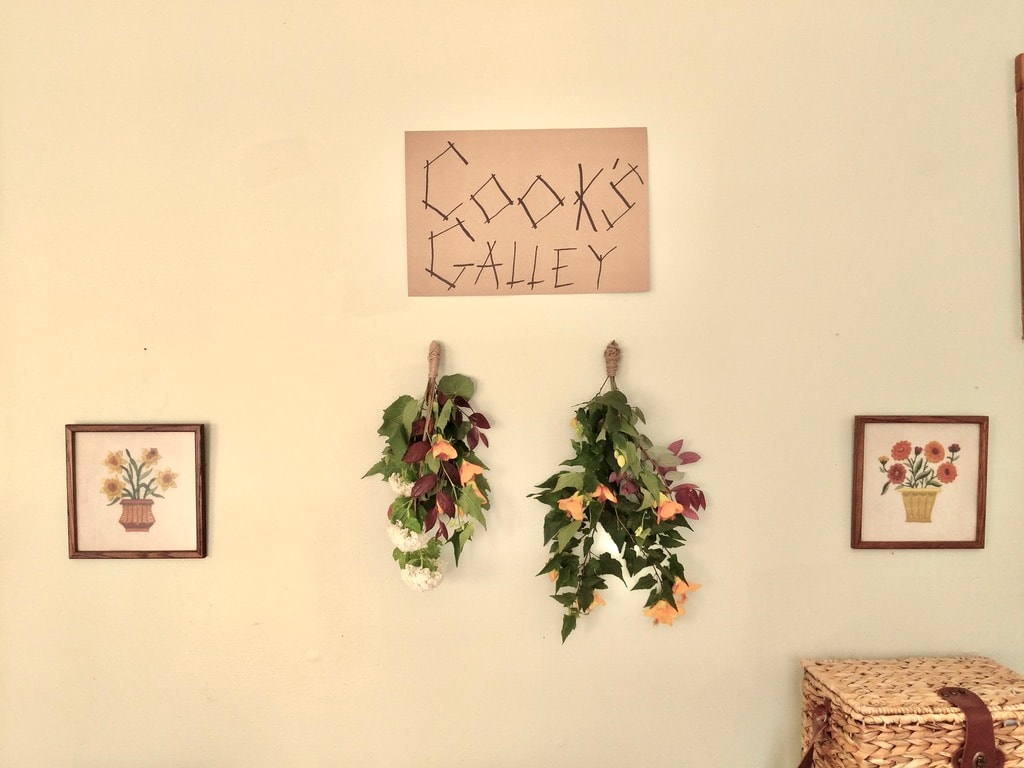
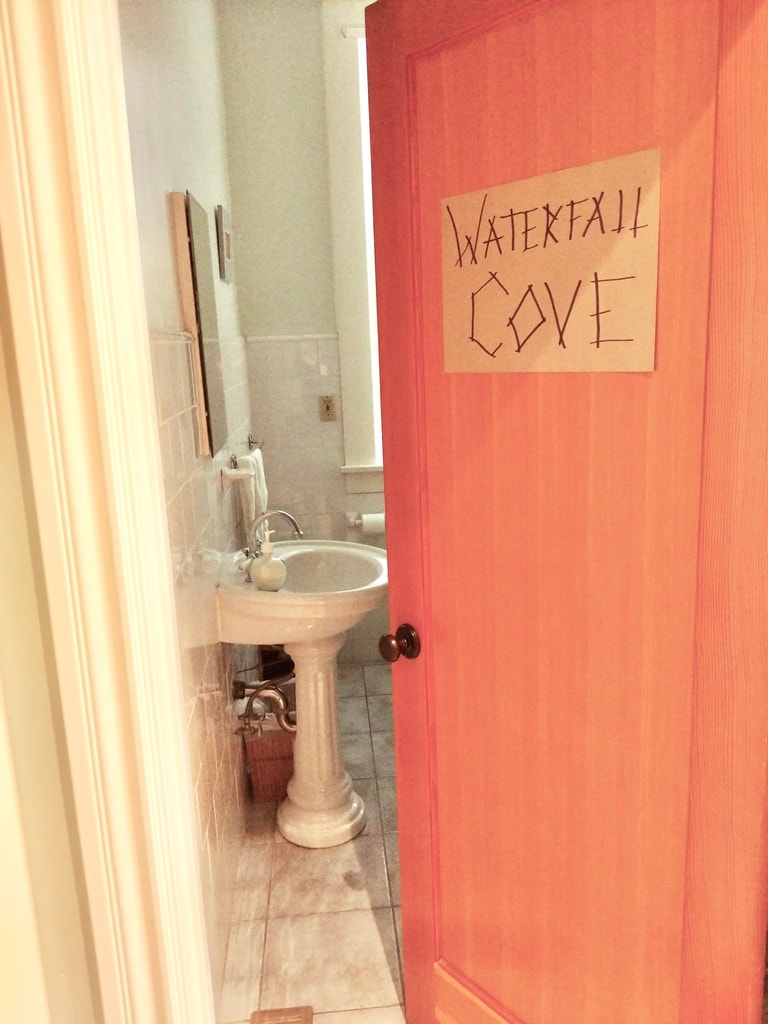
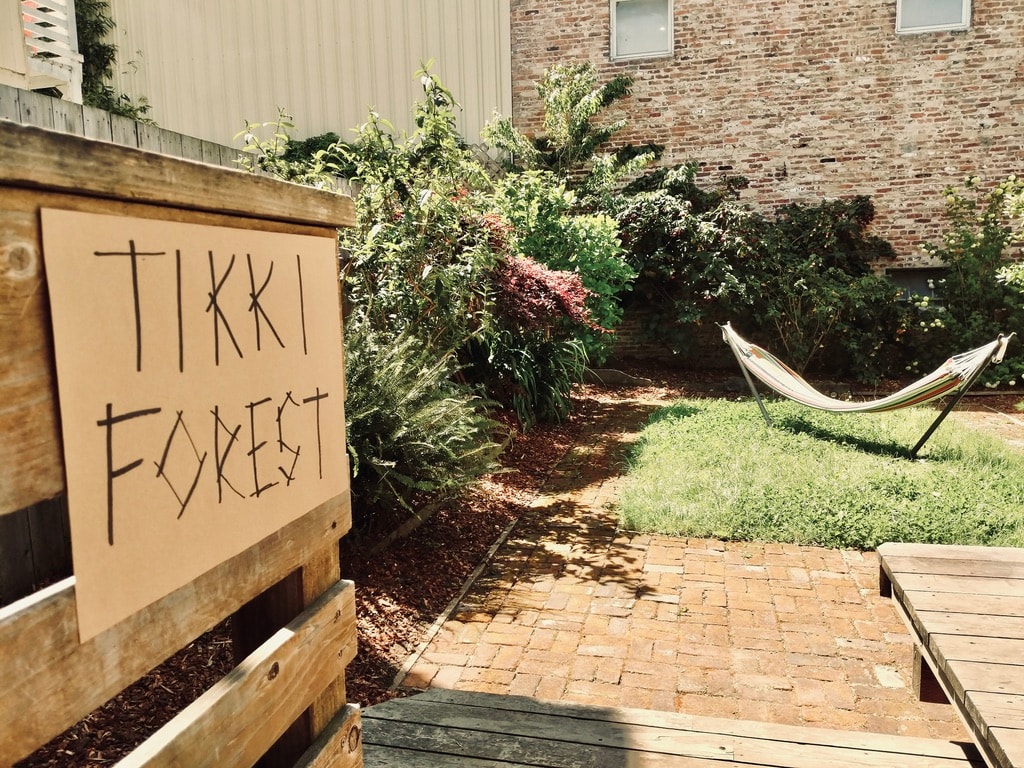
Due to the fact that we were designing this experience inside someone’s real house, we had limited scope in terms of what changes we could make to the space layout and furnishings. So we focused on making small, non-permanent, but consistent changes throughout the space, like signage and decorations, to create a cohesive experience.
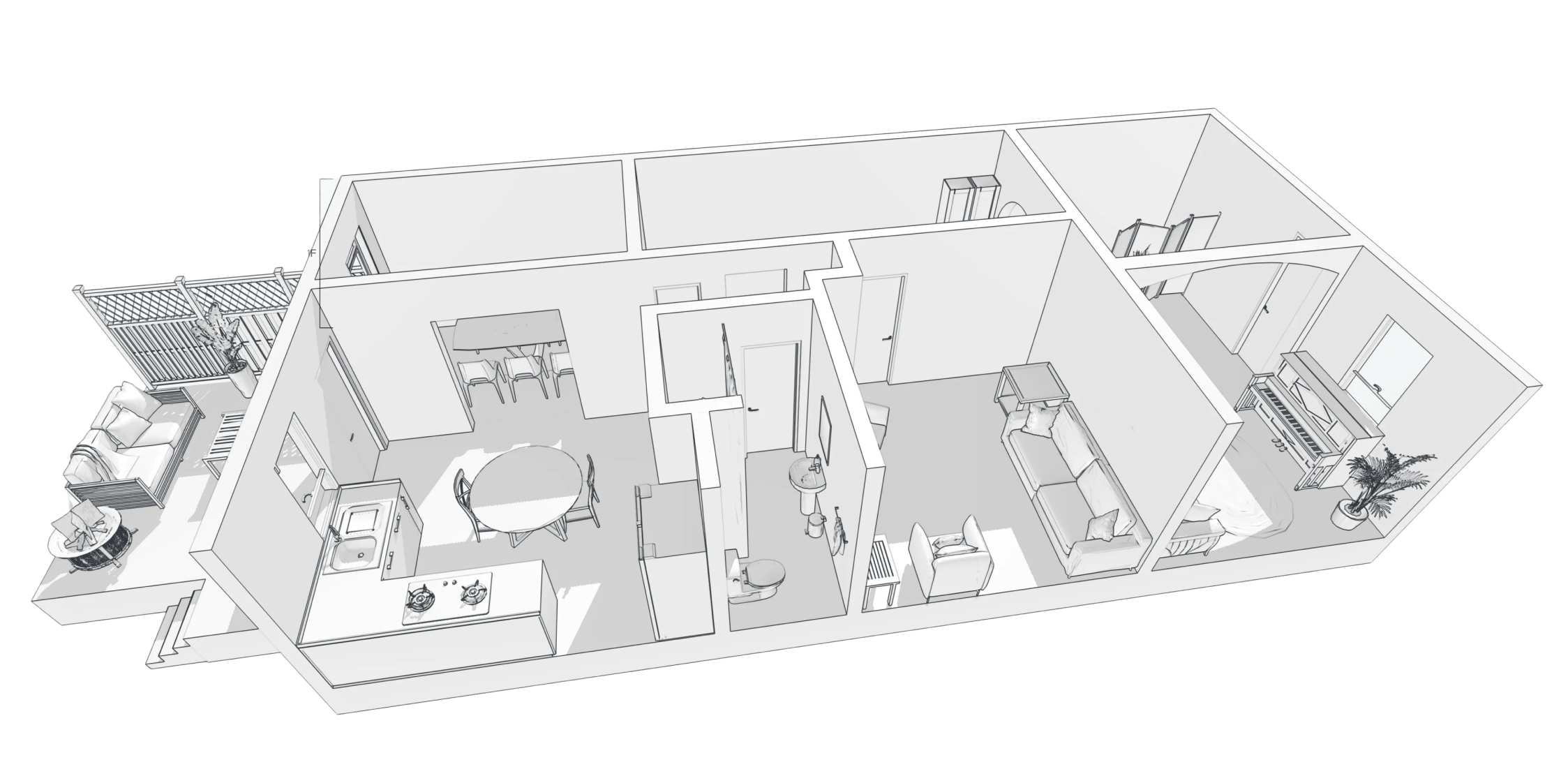

Mermaid Lagoon


Cook’s Galley

Pirate’s Bay
Tikki Forest

Lost Boy’s Hideout

Waterfall cove







Front door
Our main goals for designing the space were:
Eliminate unnecessary technology
TV, speakers, ceiling lights
Emphasize nature and the wilderness
plants, animals, lighting
Make things feel childlike and playful
typography, stuffed animals